You’re scrolling through old texts from your landlord’s lawyer, or maybe you’re background-checking someone before a first date, and there it is: ODCR. No explanation, no context, just three letters sitting in a link or a court notice. If you’re trying to pin down the ODCR meaning, you’re not alone. It shows up in legal paperwork, background check sites, and search results, and almost nobody bothers to explain what it actually stands for.
Here’s the thing. ODCR isn’t slang, and it’s not something your friend made up. It points to a real, specific system tied to court records, and once you know what it is, you’ll never squint at it again.
ODCR Meaning: What Does ODCR Stand For?
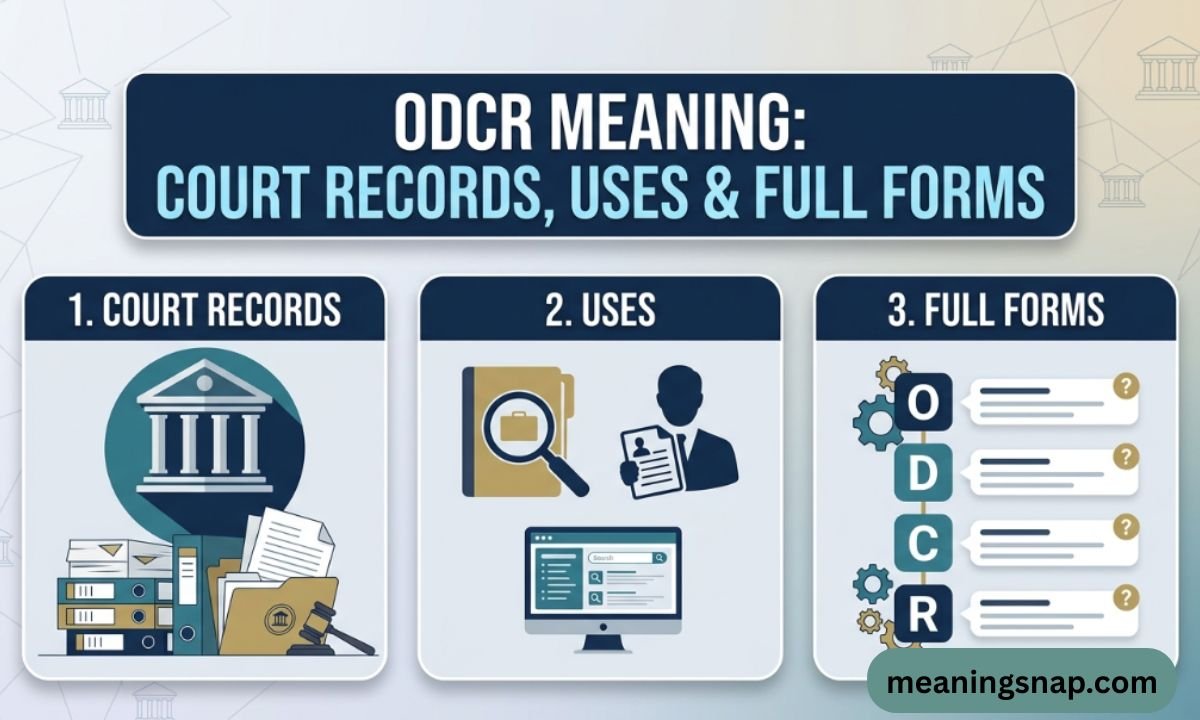
The short answer: ODCR stands for On-Demand Court Records. That’s the most common expansion, and it’s the one you’ll see on the actual platform itself when you visit the site. Getting the ODCR meaning right starts with that full name, since everything else about the system builds off it.
You’ll also run into a second version floating around online: Oklahoma District Court Records. This isn’t wrong exactly, it’s more of a descriptive nickname people use because the system covers Oklahoma’s district courts. The official brand name is On-Demand Court Records, but the functional description lines up with the second phrase too.
So when someone asks what does ODCR stand for, the accurate answer covers both angles. The formal name is On-Demand Court Records. The plain description of the service is that it gives you access to Oklahoma District Court Records. Same system, two ways people talk about it, and both show up constantly in search results and legal sites.
This matters because sources use the terms interchangeably, which is exactly where the confusion starts. If you see the ODCR full form written two different ways on two different websites, that’s why. Neither version is fake, they’re just describing the same platform from different angles, one is the brand, one is the function.
For everyday purposes, remember this one line: ODCR is a court records search platform tied to Oklahoma’s district courts. Everything else in this guide builds on that single fact, so keep it in mind as we get into where the system actually came from.
Where the ODCR Meaning Comes From (It’s Not Government-Run)
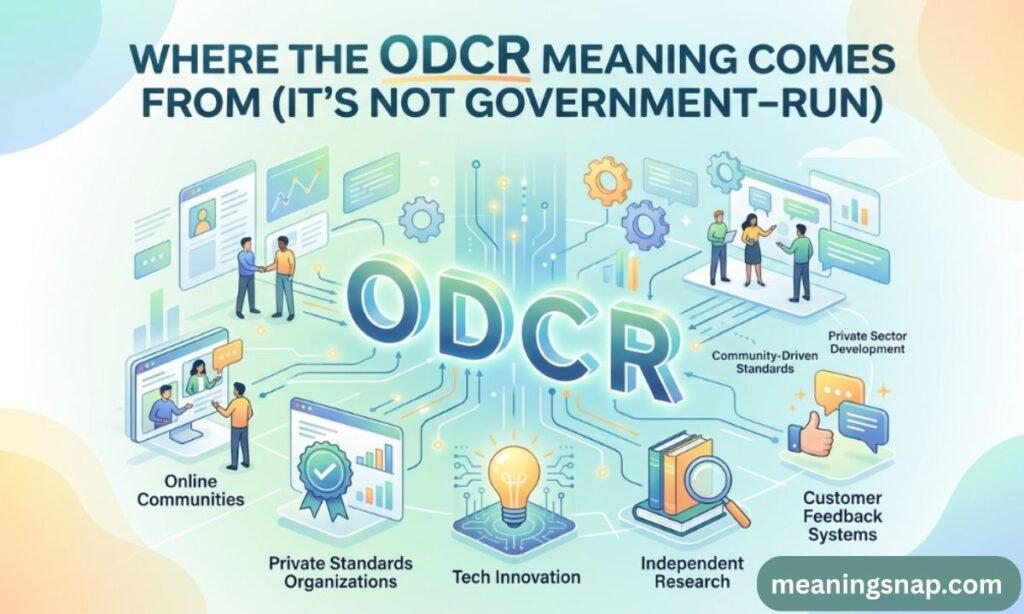
Here’s a detail most explanations skip entirely: ODCR isn’t run by the state of Oklahoma. It’s a privately operated portal, built and maintained by a company called KellPro, Inc. That’s a meaningful distinction, and it changes how much you should trust the platform as a standalone source. That backstory shapes the ODCR meaning most people never actually learn.
Oklahoma’s official, state-run court records system is a separate platform called OSCN, short for Oklahoma State Courts Network, operated directly by the Oklahoma Supreme Court. ODCR grew up alongside it to fill gaps, particularly in rural counties and tribal courts that weren’t fully folded into the state’s own central database. Instead of competing with OSCN, ODCR works more like a supplement.
Today, the ODCR records system covers court filings from more than 70 Oklahoma counties, plus several tribal courts. It exists because not every courthouse in the state uploads its filings to the same central system on the same schedule, so ODCR acts as a second, independently maintained database running in parallel.
The reason any of this is legal and public in the first place traces back to Oklahoma’s Open Records Act, specifically 51 O.S. § 24A.1, which establishes that most court filings count as public information unless a judge orders them sealed. Both ODCR and OSCN operate under that same legal framework, just through different companies, different technology, and different levels of coverage.
Knowing this backstory changes how you actually use the system. It’s not a government website with guaranteed completeness. It’s a private tool built to supplement the official one, genuinely useful, but never the full picture by itself.
ODCR vs. OSCN: What’s Actually the Difference
This is the question most people actually have, even when they don’t phrase it that way. Part of the ODCR meaning confusion comes directly from mixing it up with OSCN, so here’s a clear, side-by-side breakdown.
OSCN is the state’s own system. It’s free to use, covers all 77 Oklahoma counties, and is run directly by the Oklahoma Supreme Court. Most attorneys default to OSCN first because it’s more comprehensive for statewide searches and generally easier to navigate.
ODCR fills in the counties OSCN doesn’t fully cover, especially smaller and rural jurisdictions where courthouses may not upload records to the state system as quickly. It’s privately run, offers free basic search, but charges for document downloads and higher-tier account access aimed at attorneys and researchers.
The catch, and it’s an important one, is that these two systems don’t sync automatically. A filing might show up on ODCR days before it appears on OSCN, or the reverse could happen depending on the county. Some documents only ever make it to one system and never the other, which means relying on just one database can leave real gaps in your search.
If you’re doing anything that actually matters, checking a case before a court date, verifying someone’s record for a legal decision, or researching for a story, the smart move is searching both platforms. Treating either one as complete on its own is exactly how people miss information they needed.
How to Search Court Records on ODCR.com (Step-by-Step)
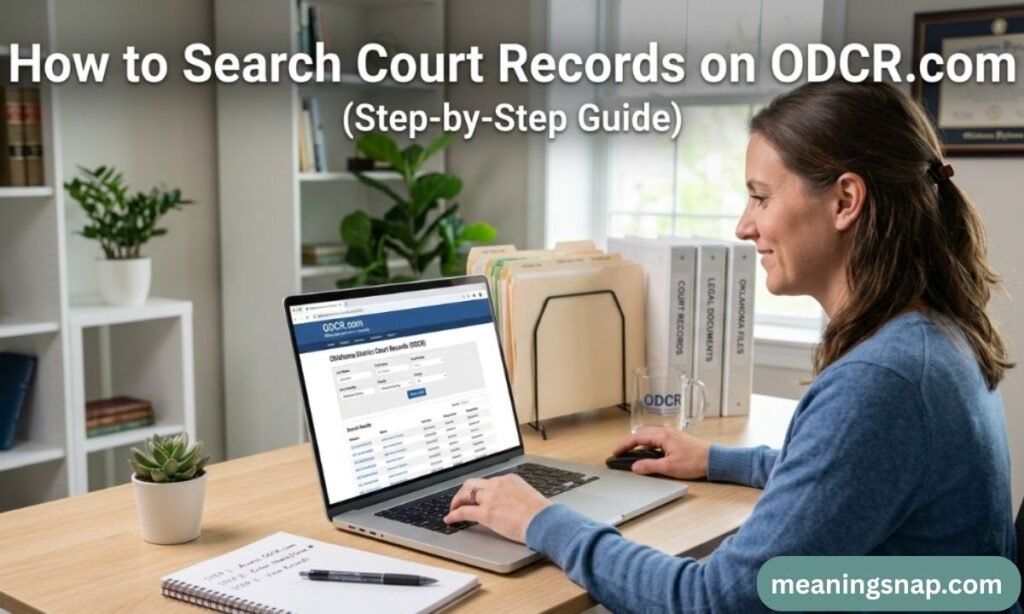
Once you’re clear on the ODCR meaning, actually using the search tool is straightforward. Here’s how the process works from start to finish.
- Go to odcr.com, the official site for the platform.
- Choose the county where the case was filed, since ODCR organizes records by participating county instead of one combined statewide pool.
- Enter what you know, whether that’s a party’s name, a case number, or a filing date range. The more detail you provide, the faster you’ll narrow the results.
- Review the case list that comes up, which typically includes the case number, party names, and filing date at a glance.
- Click into a specific case for more detail, including hearing dates and current case status.
- If you want to view or download actual scanned court documents, you’ll usually need a paid account, which is where ODCR’s subscription tiers come into play.
Basic search and case summaries are free for anyone. Full document access, especially for attorneys who need frequent, high-volume searches across counties, sits behind a paid subscription. That’s the trade-off built into the platform: quick lookups cost nothing, deeper research costs money.
One practical tip worth remembering. If a county shows no results at all, that might just mean it’s not a participating county, not proof that no case exists anywhere.
What You Can (and Can’t) Find on ODCR
This is where the ODCR meaning gets practical instead of just definitional. An ODCR court case search typically surfaces the basics you’d expect: case number, party names such as plaintiff, defendant, petitioner, or respondent depending on the case type, filing date, hearing dates, and current case status, whether it’s active, pending, closed, dismissed, or on appeal.
You’ll also find case type information, letting you tell at a glance whether you’re looking at a civil case, criminal case, family law matter, probate filing, or traffic violation. Some case entries include links to scanned court documents, though those usually require a paid account to actually view or download.
What you won’t find is just as important as what you will. Sealed and juvenile records stay off the system entirely, by law, no exceptions. Cases from non-participating counties won’t appear at all, no matter how specific your search terms are. And critically, documents pulled from ODCR aren’t certified copies, which means they can’t be used as official legal proof in most formal situations.
That last point trips people up constantly, so it’s worth calling out directly.
Common Mistake: People assume that because a document shows up on ODCR, it counts as an official legal record. It doesn’t. If you need something for a legal proceeding, like proving a divorce for remarriage or submitting evidence in court, you need a certified copy from the county clerk, not a printout from ODCR.
Keep that distinction in mind and the platform becomes a lot more useful, because you’ll know exactly when a quick search is enough and when you actually need to take an extra step.
Is There a Slang ODCR Meaning in Texting?
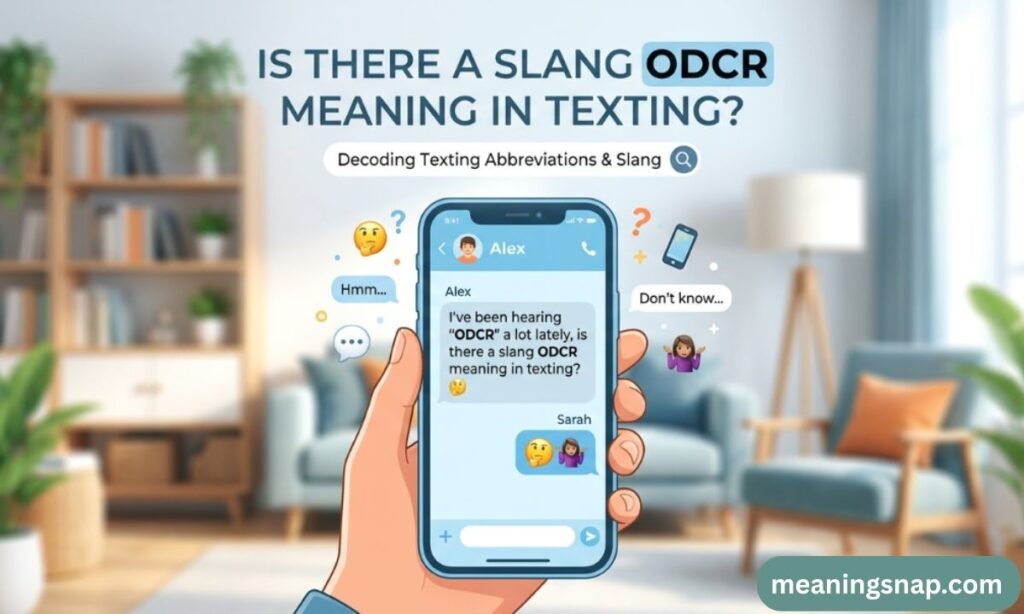
Given how many random acronyms get repurposed as internet slang, it’s a fair question. Does ODCR have some secondary, casual meaning floating around group chats?
No. The ODCR meaning stays entirely legal, not casual, and it isn’t used the way something like IYKYK or NGL gets tossed casually into a conversation. Its only real-world usage stays tied to Oklahoma court records. The confusion happens because it looks like a typical four-letter texting acronym, even though the actual context behind it is entirely legal.
That said, people absolutely do text and message about it, just not as slang with its own vibe. Here’s what those real conversations tend to look like, across a few different tones.
Casual, mildly excited:
“omg I just found the whole case on ODCR”
“wait fr?? send me the link rn”
Sarcastic:
“cool cool cool, ODCR says he still hasn’t paid the fine lol”
“shocking. truly shocking behavior”
Sincere, a little worried:
“can you check ODCR real quick, I need to know if the hearing actually got moved”
“just checked, yeah it’s pushed to next month, you’re okay”
Professional, work context:
“pull the case number off ODCR before the call today”
“already on it, sending it over in five”
Confused, first-time user:
“my lawyer’s letter has ‘ODCR’ on it, what does that even mean”
“it’s just the court records site, don’t overthink it”
Notice the range there, excitement, sarcasm, genuine concern, work urgency, plain confusion. That’s the real pattern behind ODCR usage. People reference it when they’re actually dealing with a court record, not because it’s some standalone slang term with its own meaning outside that context.
Common Mistakes People Make With ODCR
A handful of misconceptions come up again and again, and most of them trace straight back to misunderstanding the ODCR meaning in the first place.
Mistake one: assuming ODCR and OSCN are the same thing. They’re separate systems run by separate organizations, and treating them as interchangeable means you’ll likely miss records that only live on one platform and never made it to the other.
Mistake two: assuming ODCR covers every single Oklahoma county. It covers a large chunk, more than 70 counties plus tribal courts, but not all 77, and coverage gaps aren’t always obvious just from looking at the search results.
Mistake three: assuming everything on ODCR is free. Basic search and case summaries cost nothing. Scanned documents and higher-tier attorney access require a paid subscription, and that cost catches a lot of first-time users off guard.
Mistake four: assuming a document pulled from ODCR counts as a certified legal record. It doesn’t, and treating it as one in a formal legal setting, like a court filing or an official request, can cause real problems down the line.
Mistake five: assuming a blank search result automatically means no case exists. Sometimes it just means the county isn’t part of ODCR’s network yet, or the record simply hasn’t been uploaded on that particular system.
ODCR vs. OSCN vs. PACER: Quick Comparison Table
Since these three systems come up together so often in searches, here’s a side-by-side look at how they actually compare across the details that matter most. This table sums up the ODCR meaning in practical terms, not just definitions.
| System | Who Runs It | Cost | Coverage | Certified Copies? |
|---|---|---|---|---|
| ODCR | KellPro, Inc. (private) | Free basic search, paid document access | 70+ Oklahoma counties, tribal courts | No |
| OSCN | Oklahoma Supreme Court | Free | All 77 Oklahoma counties | No, in-person request required |
| PACER | U.S. federal courts | Pay-per-page after a free threshold | All federal courts nationwide | Yes, with a formal request |
Use this table as a quick gut check before you start searching. If you’re dealing with a rural Oklahoma county, ODCR might have documents that OSCN simply doesn’t have yet. If you need free, statewide coverage, OSCN is the better starting point every time. And if the case you’re researching is federal rather than state-level, neither Oklahoma system will help you at all, PACER is the one you actually need in that situation.
Frequently Asked Questions
What is the ODCR meaning, in plain terms?
ODCR stands for On-Demand Court Records, a platform for searching Oklahoma court filings across participating counties and tribal courts.
Is ODCR the same as OSCN?
No. OSCN is Oklahoma’s official, state-run court records system covering all 77 counties for free. ODCR is a separate, privately run platform covering 70-plus counties, with free basic search and paid document access.
Is ODCR free to use?
Basic case search is free for anyone. Downloading scanned court documents or getting attorney-level access requires a paid subscription.
Can I get certified court documents from ODCR?
No. Documents on ODCR are unofficial copies. For certified copies you’ll need to contact the county clerk directly for the county where the case was filed.
Does ODCR cover all of Oklahoma?
Not entirely. It covers more than 70 counties and several tribal courts, but not all 77, which means some cases only show up on OSCN and never make it to ODCR.
Bottom Line
The ODCR meaning isn’t complicated once you strip away the confusion around it. It’s a court records search tool built around Oklahoma’s district courts, run by a private company, and designed to fill in the gaps left by the state’s official system. Free for quick lookups, paid for deeper access, and never a substitute for certified legal documents when you actually need them for something official.
Next time you spot ODCR in a text, an email, or a legal notice, you’ll know exactly what you’re looking at, and exactly where to look next if the answer isn’t sitting there yet.

Alex Morgan is a writer focused on explaining slang, words, phrases, acronyms, and popular expressions in a simple and easy-to-understand way. Through clear explanations and helpful examples, Alex helps readers quickly understand what words and phrases mean and how they’re commonly used.