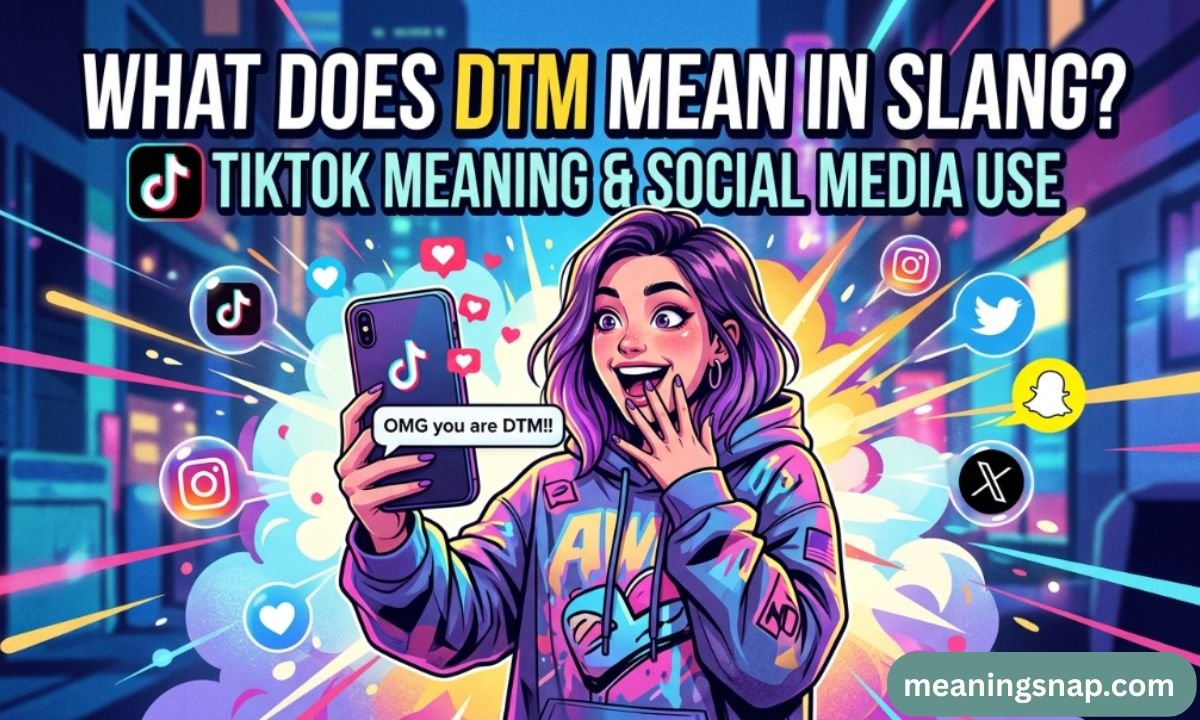
Your friend vents in a group chat for ten minutes straight. Someone replies with three letters: DTM. No context, no emoji, nothing else. You stare at your screen, unsure if it was support, shade, or something else entirely, and you scroll back up hoping for a clue. Confusion around the DTM meaning pops up constantly across TikTok comments, Snapchat replies, and group chats, and it’s easy to see why. The phrase changes tone depending on who sends it and where.
Sometimes it’s a joke. Sometimes it’s a boundary. Other times it’s someone reacting to drama with three letters instead of a full sentence. This guide breaks down every real meaning of DTM, where each one shows up, and how to reply so you never freeze up over three letters again.
DTM Meaning: The Quick Answer
The short answer is simple. DTM most commonly means Doing Too Much. People use it to call out dramatic, exaggerated, or over-the-top behavior, whether it’s a friend spiraling over a small mix-up or a stranger going off in a TikTok comment section.
This is the primary use you’ll run into across texting, Snapchat, TikTok, and Instagram. Someone posts something dramatic, someone else replies DTM, and everyone understands the tone instantly. It’s short, it lands fast, and it works whether you’re teasing a friend or genuinely calling something out.
DTM isn’t locked to one meaning, though. Depending on the platform and the relationship between the people talking, it might mean Down To Meet, Don’t Text Me, or occasionally Dead To Me. Each version reads differently, and mixing them up leads to some genuinely awkward replies.
Here’s the thing: context does most of the work. A DTM sent after someone describes a chaotic night out reads nothing like a DTM sent after an argument. The letters stay the same. The meaning moves around them, which is exactly why so many people search “what does DTM mean” instead of guessing.
Whether it shows up in a group chat, a comment section, or a private DM, the DTM meaning in chat stays consistent with how it reads everywhere else. This consistency is what makes the term easier to pick up than most internet slang, once the pattern clicks.
Quick Answer DTM most often means “Doing Too Much,” used to describe someone acting dramatic, extra, or over the top. Less commonly, it means “Down To Meet” or “Don’t Text Me,” depending on the conversation.
Where DTM Meaning Came From
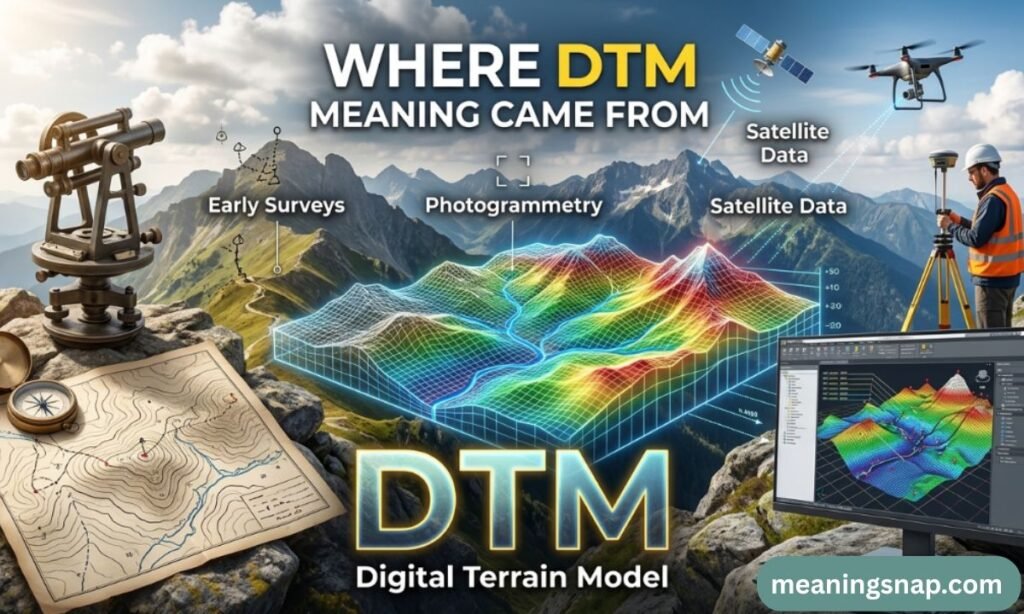
DTM didn’t start on TikTok, even though most people first saw it there. The full phrase, “doing too much,” has circulated in African American Vernacular English for decades, used to call out someone overplaying a moment or dialing up drama nobody asked for. Long before texting existed, people said the full phrase out loud in exactly the situations DTM covers today, alongside cousins like “extra” and “shade.”
The shift from full phrase to abbreviation happened gradually online. As Twitter and Instagram captions competed for character space, “doing too much” got shortened the same way plenty of phrases do when speed matters more than spelling everything out. TBH, NGL, and IDK went through a similar process, and the DTM abbreviation followed the same path into everyday texting abbreviations. Understanding how this internet slang term evolved makes it feel less random and more like a natural next step from a much older phrase.
TikTok accelerated all of it. Comment sections move fast, and three letters communicate a reaction quicker than a full sentence. Once creators and commenters started dropping DTM under dramatic videos and reality-show recap clips, the abbreviation spread across group chats, Snapchat, Discord servers, and everyday texting within a couple of years. Recap and reaction culture especially leaned on it, since summarizing a messy plotline in three letters beats typing out a paragraph.
Worth noting: the phrase carries real cultural weight. Since “doing too much” comes out of Black vernacular English, the way people use DTM today still echoes this origin, even if most people typing it have no idea where the phrase started. Knowing the background doesn’t change how you use it, but it explains why the phrase feels natural rather than manufactured, and why it caught on so fast among Gen Z and younger millennials in the US, UK, and Canada. UK users tend to pair it with homegrown slang, while US and Canadian users often drop it standalone in comment sections.
Every Meaning of DTM (There’s More Than One)
DTM carries more than one meaning, and reading the wrong one into a text leads to some confusing replies. Here’s a breakdown of every version you’ll run into, ranked from most to least common.
Doing Too Much
This is the meaning you’ll see most, especially in comment sections and group chats. Someone reacts to a small inconvenience like it’s the end of the world, and a friend fires back DTM to call out the overreaction, usually with affection rather than genuine criticism. People also turn it on themselves, posting a dramatic caption and adding “I know, DTM” before anyone else has the chance to say it first. This self-aware version has become almost as common as the original callout, especially among college students and younger millennials poking fun at their own group chat energy and their tendency toward overthinking a completely normal situation.
Down To Meet
In dating apps and flirtier conversations, DTM sometimes means Down To Meet, as in agreeing to meet up in person. It shows up after a few days of texting, once someone wants to move things offline.
Don’t Text Me
Less common, but still around: DTM as a boundary. Someone uses it to shut down a conversation, usually after an argument or an ex reaching out uninvited. This version reads far more serious than the other two.
Dead To Me
Rare and dramatic, this version pops up in venting sessions or memes about petty grudges. It’s less a literal statement and more an exaggerated reaction used for comedic effect, closer to a bit than a real declaration.
DTM in Action: Real Examples by Platform
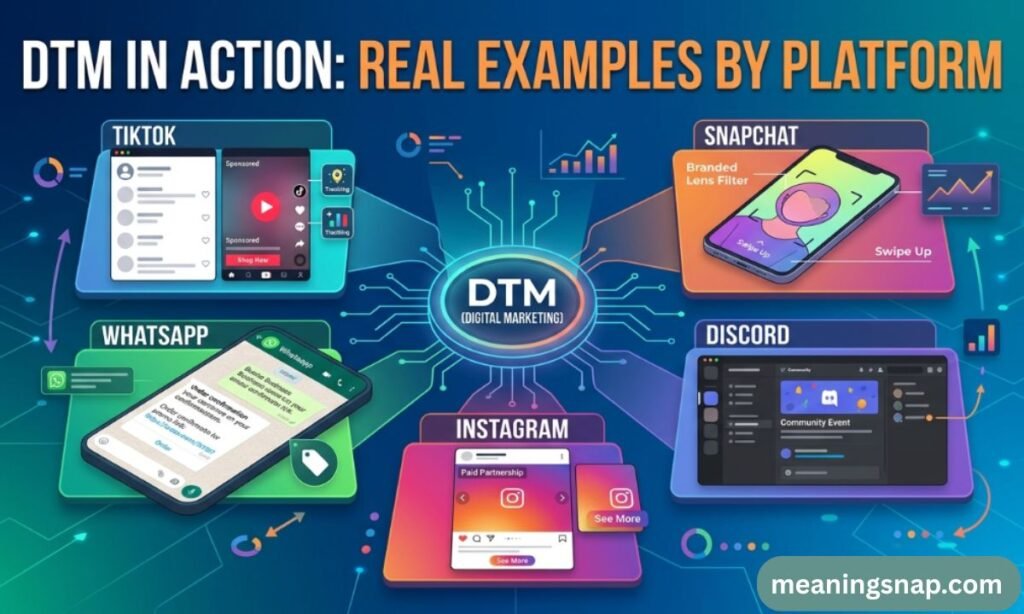
Seeing DTM in a real conversation makes the meaning click faster than any definition. Here’s how it shows up across different apps, with the tone shifting slightly depending on where it lands.
DTM on TikTok
Comment under a video of someone crying over a canceled coffee order: “the way she’s sobbing over oat milk, DTM.”
Reply under a dramatic storytime video: “wait this whole video was over one text message, DTM fr.”
DTM on Snapchat
Text: “he texted ‘we need to talk’ and I haven’t slept in two days.” Reply: “girl DTM, don’t stress about it.”
DTM on Instagram & WhatsApp
Comment on a story showing a three-paragraph caption about a canceled brunch: “the essay under a canceled brunch, DTM.” In a WhatsApp family group chat, the same three letters show up when someone turns a missed bus into a full saga.
DTM in Regular Texting
Text: “should I text him back or wait exactly 3 hours to seem busy.” Reply: “DTM, text him back lol.”
DTM on Discord
Gaming chats get their own version, usually aimed at a teammate spiraling after one bad round: “bro rage quit over one loss, DTM.” Teenagers and college students in Discord servers use it the same way TikTok commenters do, aimed at teammates instead of strangers online.
How to Tell Which DTM Someone Means
Since DTM covers a few different meanings, context carries most of the weight. A few signals make the read easier, and paying attention to them saves you from replying in the wrong tone entirely.
Look at what came before it. If someone described a small situation getting blown out of proportion, DTM almost always means Doing Too Much. If the conversation involves plans, dates, or “we should hang out,” DTM likely means Down To Meet instead.
Tone matters too. A DTM dropped with a laughing emoji or in the middle of a joke reads playful. A DTM sent alone, with no punctuation, after a serious conversation reads like a boundary, closer to Don’t Text Me.
Platform gives clues as well:
- TikTok and Instagram comments lean toward Doing Too Much almost every time, since the whole feature is reacting to content.
- Dating app conversations and flirty group chats lean toward Down To Meet.
- Personal texting after conflict leans toward the boundary-setting version.
Relationship context finishes the picture. Friends usually mean it playfully. Someone you’re arguing with, or barely know, might mean it as a real cutoff. When the meaning still feels unclear, it’s fine to ask directly instead of guessing and replying wrong.
You Also Like: WYF Meaning in Text: What It Really Means (You’ll Be Surprised)
Common Mistakes People Make With DTM
A few mix-ups happen over and over with this abbreviation, and most of them come down to reading speed rather than genuine confusion.
The biggest one is confusing DTM with DTF, a completely different and far more explicit acronym. They look similar typed quickly, but the meanings don’t overlap at all. Reading one for the other, or worse, sending one instead of the other, leads to some seriously awkward misunderstandings.
Another common mistake: assuming DTM always carries a negative edge. Most of the time it’s teasing, not criticism. Reading it as an attack when a friend sends it after a funny story misses the tone entirely, and it tends to make casual banter feel heavier than it needs to be.
People also mix up Doing Too Much with Don’t Text Me, especially in serious conversations. Replying with a joke to what was meant as a boundary comes across badly, so it’s worth pausing to reread the conversation before firing back a response.
One last mistake worth mentioning: treating DTM as universally understood. Not everyone knows the term, and using it in a professional email or with someone outside your usual group chats might land as confusing rather than funny. Slang this casual works best where everyone already speaks the same shorthand.
It’s also easy to type DTM into a message meant for a different acronym entirely, since autocorrect on some phones tries to expand three-letter combinations into full words. Double-checking a message before sending saves the awkward follow-up text explaining what you meant.
DTM Meaning Comparison Table
Here’s a quick side-by-side to keep every version straight, since scrolling back through definitions mid-conversation gets old fast. The platform and the tone next to each meaning tend to be the fastest way to double-check a read.
| Meaning | Common Platform | Example | Tone |
|---|---|---|---|
| Doing Too Much | TikTok, Instagram, group chats | “she cried over oat milk, DTM” | Playful, teasing |
| Doing Too Much (self-directed) | Captions, stories | “posting this at 2am, I know, DTM” | Self-aware, joking |
| Down To Meet | Dating apps, flirty texting | “DTM this weekend?” | Casual, inviting |
| Don’t Text Me | Personal texting, after conflict | “DTM. we’re done talking” | Serious, firm |
| Dead To Me | Venting, memes | “he canceled again, DTM forever” | Dramatic, exaggerated |
Keep this nearby for the next time a DTM text throws you off mid-conversation.
Is DTM Okay to Use? (School, Work, Everywhere Else)
DTM sits firmly in casual territory, which shapes where it belongs.
Among friends, it’s harmless. It reads as playful teasing more often than genuine criticism, and most people its age recognize it instantly. Group chats, TikTok comments, and Snapchat replies are exactly where it’s meant to live.
School and casual class group chats work fine too, especially texting between classmates. Formal settings are a different story. Sending DTM in a work email, a professional Slack channel, or a school assignment isn’t going to land the way it does in a group chat. Plenty of coworkers and teachers won’t recognize the abbreviation at all, and the ones who do might read it as unprofessional.
Age plays a role here too. Gen Z tends to use DTM without a second thought, dropping it into comment sections on autopilot. Millennials picked it up more recently and use it a little more deliberately, often in texting rather than public comments. The DTM meaning on TikTok skews younger overall, while the DTM meaning on Snapchat leans toward a slightly older, more established crowd who joined the platform earlier. Some younger coworkers use it in casual internal Slack messages among peers, but it rarely shows up in anything client-facing or written for a wider audience.
Is it offensive? Generally not. It reads closer to lighthearted ribbing than an insult, though tone still matters. Used aggressively, or aimed at someone already upset, it stings the same way any teasing does when the timing is off. Read the room before sending it, the same way you would with any piece of internet slang.
Frequently Asked Questions
What does DTM mean in text?
The DTM meaning in text is usually straightforward: it means Doing Too Much, used to call out someone acting dramatic or exaggerated. Less commonly, it means Down To Meet or Don’t Text Me, depending on the conversation and the relationship between the people texting. The platform and the message right before it usually make the intended meaning obvious.
Is DTM the same as DTF?
No. They look alike typed quickly, but DTF has a completely different, explicit meaning. Mixing them up leads to some genuinely awkward replies, so it’s worth double-checking before sending either one.
Is DTM rude to say?
Usually not. It reads as playful teasing among friends far more often than an insult. Tone and relationship still decide how it lands, so reading the situation first goes a long way.
Is DTM okay to use at school or work?
Among classmates, sure. In professional emails or formal settings, skip it. Plenty of coworkers won’t recognize the abbreviation, and it reads as too casual for formal communication. Save it for texting, group chats, and comment sections instead.
What’s the best way to reply when someone says DTM?
Match the tone you got. A playful DTM deserves a playful reply, like a laughing emoji or a joke back. If it reads like a boundary, respect it and give the person space instead of pushing for an explanation. Reading the original message twice before replying helps avoid the wrong tone entirely.
Bottom Line
DTM is a small abbreviation carrying a surprising amount of range, from teasing a friend over something small to shutting a conversation down entirely. Doing Too Much stays the most common version by far, especially anywhere TikTok comments or group chats are involved, but the other meanings show up often enough to catch you off guard if you’re not paying attention.
The real skill isn’t memorizing every definition. It’s reading tone, platform, and relationship together, since those three things tell you almost everything a DTM text is trying to say. A comment under a chaotic TikTok video means something different than a lone DTM text sent after a fight, and once the difference becomes easy to spot, the abbreviation stops being confusing and starts working as genuinely useful shorthand between friends who already get it.
Next time DTM shows up in your notifications, you’ll know exactly which version you’re looking at, and exactly how to reply.

Alex Morgan is a writer focused on explaining slang, words, phrases, acronyms, and popular expressions in a simple and easy-to-understand way. Through clear explanations and helpful examples, Alex helps readers quickly understand what words and phrases mean and how they’re commonly used.