You’re texting back and forth with a friend from El Salvador, everything’s chill, then they toss out “ya cállate cerote” and your stomach drops. Did you just get insulted? Or is this just how texting works between amigos? If you searched cerote meaning in Spanish right after that message landed, you’re not alone. This word shows up constantly in Central American group chats, comment sections, and TikTok clips. It can mean something genuinely rude, or something almost affectionate, depending entirely on who’s saying it and how.
Here’s the thing: cerote isn’t one of those words with a single, tidy definition. It shifts with tone, region, and relationship, and getting it wrong in either direction can land weird. Let’s sort out what it means, where it came from, and when it’s safe to use.
What Does Cerote Mean in Spanish?
At its core, the cerote meaning in Spanish comes down to two connected ideas. Word for word, it means a turd. Figuratively, it works as an insult roughly equal to calling someone an idiot, a jerk, or worse. That’s the literal translation you’ll find in most dictionaries, and it’s accurate as far as it goes.
Dictionaries miss the part that matters day to day, though. In casual conversation, especially among close friends in Central America, cerote often drops the insult entirely. It becomes a way to say “dude” or “man.” Think of how “bro” can carry genuine warmth or open sarcasm depending on tone. Cerote works the same way.
So when someone asks what cerote in English comes closest to, the honest answer is: it depends. Word for word, you’re looking at “turd” or “shit.” As an insult, it lands closer to “asshole” or “jerk.” As a nickname between friends, it’s closer to “dude,” just with more edge. The cerote slang meaning you need in the moment depends on a few things. Who’s talking, their tone, and what came right before it in the conversation.
One thing stays consistent. This isn’t a word for formal settings, job interviews, or conversations with someone’s abuela. Save it for texting friends, casual conversation, or contexts where the other person already uses this kind of language themselves.
Read Also:Lumon Meaning Explained: Severance & Hidden Symbolism
Where Does Cerote Come From?
Understanding the word origin behind cerote makes the rest of this a lot easier to follow. It traces back to cera, the Spanish word for wax, which comes from the Latin root cera as well. Add the Spanish augmentative suffix -ote, which roughly means “big” or “large.” Put them together and you get cerote: word for word, “big wax.”
That sounds harmless until you learn why it stuck. Shoemakers used to coat their thread with a dark, sticky wax to make it waterproof and easier to pull through leather. That wax, once rolled and shaped by hand, looked a lot like, well, a turd. The resemblance stuck hard enough that people started using cerote as slang for exactly that, and the meaning never let go.
Did You Know? Cerote isn’t internet slang someone invented. It has an entry in the Real Academia Española (RAE) dictionary, the official authority on the Spanish language. That’s a level of legitimacy most vulgar expressions never get.
From “big wax” to “turd” to “insult” follows a pattern you’ll spot across plenty of languages: something unpleasant becomes shorthand for an unpleasant person.
Two Meanings Almost Nobody Mentions
Two lesser-known senses of cerote rarely make it into slang guides. In parts of the Southern Cone and the Andes, phrases like tener cerote lean a different way. They point toward being scared, or covered in a mess. It’s more about fear or fluster than an insult.
Then there’s a meaning with zero connection to any of this. In parts of Ecuador, cerote refers to a specific type of wood found in highland areas. Locals traditionally carve it into trompos, the spinning tops kids play with. It’s a regional dialect quirk, not slang, and it has nothing to do with the vulgar meaning at all. If cerote shows up in an Ecuadorian context about toys or woodworking, this is why.
Where Is Cerote Used Across Central America?
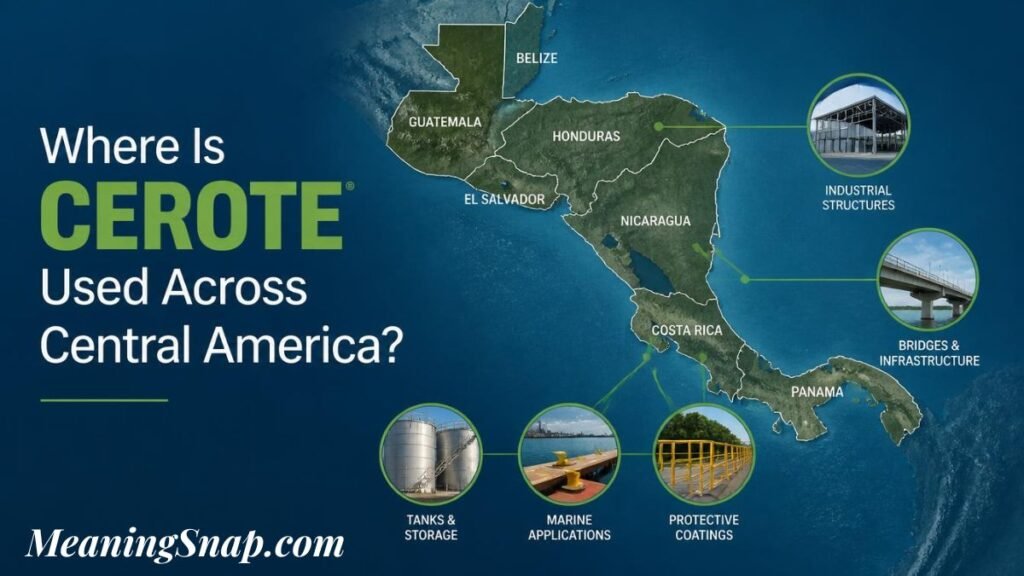
The cerote meaning in Spanish doesn’t stay fixed once you cross a border. It shows up across Central American slang in El Salvador, Guatemala, Honduras, Nicaragua, Costa Rica, and Panama. The intensity, and how casually it gets used, shifts region to region.
Before using it anywhere, it helps to see how the vibe changes country to country:
| Country | How Common | Typical Tone | Example Use |
|---|---|---|---|
| El Salvador | Widespread | Casual, often friendly | Greeting close friends |
| Guatemala | Widespread | Sharper, more insult-leaning | Calling someone out |
| Honduras | Common | Mixed, context-dependent | Frustration or banter |
| Nicaragua | Moderate | Mostly vulgar or insult | Anger, conflict |
| Costa Rica | Uncommon | Vulgar, rarely casual | Rare, mostly insult |
| Panama | Uncommon | Vulgar | Rare, mostly insult |
Notice the pattern. The closer you get to El Salvador and Guatemala, the more likely you are to hear cerote used casually between friends. It’s less about a pure insult there.
El Salvador vs. Guatemala: Same Word, Different Weight
Cerote in El Salvador tends to land the lightest of anywhere in the region. Close friends use it constantly, almost like punctuation, similar to how “dude” gets tossed into English sentences without much thought. Salvadorans living abroad often describe hearing cerote from another Salvadoran as an instant connection back home. It’s a small piece of Salvadoran culture riding along in one syllable.
Cerote in Guatemala leans harder into the insult side. It’s still used between friends, but it carries more edge. Using it with someone you don’t know well is far more likely to register as a genuine insult rather than banter. If you’re unsure which country’s version you’re dealing with, treat it as an insult until someone shows you otherwise.
Read More: Tried and True Meaning: Definition, Examples & Usage
Cerote in Honduras: The In-Between Case
Cerote in Honduras sits right between its Salvadoran and Guatemalan neighbors. Hondurans use it both ways: as a light, joking nickname among close friends, and as a real insult when someone’s genuinely angry.
Context does more work here than in almost any other country on this list. The same word said with a laugh at a soccer game means something completely different from the one shouted during an argument outside a bar. Honduran Spanish also freely mixes cerote with other local slang, like maje, in the same sentence, stacking casual terms together the way English speakers toss around “dude” and “man” in one breath.
If you’re chatting with a Honduran friend and cerote shows up mid-joke, you’re almost always fine. If it shows up alone, flat, with no punctuation or emoji softening it, treat it the same way you’d treat any insult from a stranger.
Is Cerote Used in Mexico?
Searches for cerote in Mexico are constant, but the honest answer is that this isn’t native Mexican slang. Mexican Spanish has its own deep well of insults and nicknames, and cerote generally isn’t part of it.
That doesn’t mean it’s never heard, though. Central American immigrant and diaspora communities in Mexico use it regularly. Mexican Spanish speakers who follow Salvadoran or Guatemalan creators online will recognize the word even without using it themselves. Picture an American who understands British slang from watching enough UK shows without ever saying it out loud.
If a Mexican friend uses cerote with you, they most likely didn’t grow up saying it. There’s a decent chance they picked it up from a Central American friend, a partner, or social media instead. It won’t sound wrong. It will sound borrowed, and most Mexicans will clock it as a Central American word even while using it themselves.
Border states and cities with large Central American communities, like parts of southern Mexico, hear it more often than cities further north. Even there, it tends to stay inside those communities rather than spreading into wider Mexican slang. If you’re building your Spanish vocabulary specifically for a trip to Mexico City or Guadalajara, this word can sit lower on your list. Save your energy for cerote if you’re headed to San Salvador or Guatemala City instead, where it comes up in everyday conversation constantly.
Is Cerote a Bad Word, or Just Slang Between Friends?

This is the question that matters most before you type it. Is cerote offensive? Technically, yes. It’s classified as a vulgar expression in every major Spanish dictionary. Using it with a stranger, an elder, or in any formal setting will land as a real insult, not a joke.
Vulgar and forbidden aren’t the same thing, though. Among close friends, especially within Salvadoran culture, cerote functions less like a slur and more like a badge of familiarity. Writers and creators from El Salvador have described hearing cerote from another Salvadoran abroad. It feels like instant belonging, like the word carries a piece of home inside it. That’s cultural identity doing real work, not just profanity. Some call this style of speech Caliche, the everyday Salvadoran dialect that mixes standard Spanish with local slang like cerote.
The line comes down to relationship and tone:
- From a stranger, in anger: a serious insult.
- From a close friend, mid-conversation: a playful insult that barely registers as rude.
- Between diaspora communities catching up: closer to an affectionate nickname than an insult at all.
If you’re not part of the friend group using it this way, don’t assume you’ve earned the casual version just because you heard it once. Context earns that access. Nobody hands it over for free.
Cerote vs. Cabrón: How the Two Insults Differ
People often ask about cerote vs cabrón because both get thrown around as all-purpose insults, but they come from different worlds. Cabrón meaning in Mexican Spanish centers on “goat,” extended into slang for someone sneaky, tough, or occasionally impressive, depending entirely on tone. It’s flexible enough to mean “asshole” in one sentence and “badass” in the next.
Cerote doesn’t flex that way. Its root stays tied to something dirty and unpleasant, so even in its friendliest use, there’s a rougher edge underneath. Cabrón can genuinely compliment someone. Cerote almost never does. It just softens from insult to banter.
Geography splits them cleanly too. Cabrón belongs to Mexican slang and travels across Spain and much of Latin America. Cerote stays rooted in Central American slang, rarely traveling beyond the region and its diaspora communities. Use cabrón with a Mexican friend and it lands naturally. Try that with a Salvadoran friend instead, and cerote fits the conversation far better.
Swapping one for the other in the wrong country doesn’t just sound off, it can genuinely confuse people. A Guatemalan friend hearing cabrón might assume you’re mixing up your Spanish dialects, since the word barely registers in everyday Central American speech. Match the insult to the region, and both words do exactly what they’re supposed to do.
What Does Maje Mean in Spanish?
Maje comes up constantly in the same conversations as cerote, and it’s worth knowing the difference. Maje means “dude” or “guy” in a neutral to friendly sense. It can also mean “fool” or “silly” depending on context, similar to how cerote splits between nickname and insult.
The big difference is intensity. Maje sits much lower on the vulgarity scale. Parents use it with their kids, coworkers use it casually, and strangers use it without much risk of causing offense. Cerote almost never gets used that freely.
Maje shows up across El Salvador, Honduras, Guatemala, Nicaragua, Costa Rica, and Panama, making it even more widespread than cerote. A typical exchange looks like this:
Esteban: ¿Qué hubo, maje? ¿Vamos al parque? Rodrigo: Va pues, ahí te veo.
That’s a completely ordinary, friendly greeting, the kind you’d hear anywhere from a classroom to a family barbecue. If you’re looking for a safer word to practice before working up to cerote, maje is the better starting point.
How to Use Cerote in a Sentence
Examples land better than any dictionary definition here. This is how cerote shows up in real conversations, across a few different tones:
Diego: ¿Qué onda, cerote? ¿Dónde andás? Mateo: Aquí vago, ya voy para allá. (Casual greeting between friends, zero offense intended.)
Camila: No puedo creer que perdiste las llaves otra vez, cerote. Sofía: Ya sé, ya sé, dejame en paz jaja. (Light teasing, sarcastic but affectionate.)
Renata: ¡Ese cerote me robó el estacionamiento! (Genuine frustration at a stranger, closer to “that jerk” in tone.)
Julián: No seas cerote, préstame el cargador. Bryan: Ok ok, toma. (Playful complaint between friends, low stakes.)
Valeria: Es un cerote total, no le importa nadie más que él. (Sincere criticism of someone’s character, no humor intended.)
Fernanda: Cuidado con ese cerote, dicen que no paga sus deudas. (Sincere warning about someone’s reputation, no joking involved.)
Notice how identical wording changes meaning entirely depending on who’s talking and what’s happening around it. Text alone rarely tells you the tone, and emojis or punctuation barely help either. That’s exactly why cerote confuses so many non-native speakers reading it cold in a group chat. Context always wins over the dictionary definition.
How to Pronounce Cerote (and Why People Spell It “Serote”)
Once you’ve got the cerote meaning down, cerote pronunciation is the next hurdle. It’s said seh-ROH-teh, with the stress landing on the middle syllable and a soft, tapped single “r” sound.
The tricky part is the letter “c.” In most of Latin America, a feature called seseo is behind this. A “c” before “e” or “i” sounds exactly like an “s,” not like the “th” sound you’d hear in parts of Spain. That’s the entire reason people search cerote vs serote so often. It isn’t a real spelling variant. It’s just how the word sounds to someone typing what they hear instead of what’s technically written.
If serote shows up in a comment section or text message, treat it as the same word, just spelled by ear. The dictionary-recognized spelling stays cerote, with a “c.” Using serote meaning searches won’t cause much confusion, since context usually makes it obvious either way. If you’re writing it for the first time, though, cerote is the version that matches the RAE entry and every reputable dictionary source.
This same seseo pattern trips people up with other Spanish words too, not just this one. Once you recognize the pattern here, spotting it elsewhere gets a lot easier, and you’ll stop second-guessing whether an unfamiliar spelling online is a typo or a real regional variant.
Serota, Sarote, and Other Common Misspellings
Beyond serote, a few other spellings float around online, most often serota and sarote. Neither is a standard or dictionary-recognized word.
Serota meaning in English boils down to the feminine form, cerota, written with an “s” for the same seseo reason serote gets misspelled. It refers to a woman the way cerote refers to a man, nothing more complicated than that.
Sarote is trickier, and it likely comes from a mix-up with a completely different word: sorete. That’s Argentine and Uruguayan slang for the exact same thing, a turd, spelled with an “o” instead of an “a” or “e.” Someone who’s heard both cerote and sorete used in different contexts, especially online where accents and spelling blur together, can land on a hybrid spelling like sarote by accident.
None of these variants change the underlying meaning much. Run into cerote, cerota, serote, serota, or sarote, and you’re dealing with the same family of words: vulgar, regional, and entirely dependent on tone.
Cerote in Pop Culture and on TikTok
Search TikTok slang content around cerote and two distinctly different video types turn up. Spanish-teaching creators use it as a cautionary example. They warn language learners not to casually greet Salvadoran or Guatemalan friends with it until they understand the context first. Salvadoran and Guatemalan comedians and creators lean into it themselves, on the other hand. They joke about how often outsiders misread the word, or turn it into a punchline about Central American identity.
That split says a lot about how the word functions online. It’s popular enough in comment sections and captions to trend regularly, but it isn’t neutral internet slang like plenty of other viral terms. Nearly every video covering social media slang around cerote circles back to the same warning: know your audience before you use it.
If cerote pops up in a caption or comment from a Central American creator, it’s almost always a joke. Sometimes it’s a callback to home, or banter between friends in the comments, not a targeted insult aimed at a random viewer. Outside that context, in a comment thread full of strangers arguing, it reads exactly the way it looks: an insult meant to sting.
Is There a Cerote Food or Dish?
A surprising number of people search cerote alongside the word food, and the honest answer is no. There’s no dish, ingredient, or recipe called cerote anywhere in Spanish-speaking cuisine. Nothing in Mexican, Guatemalan, Salvadoran, or Honduran food culture uses this name.
The confusion likely comes from context rather than the word itself. Cerote shows up constantly in casual conversation, including conversations happening around meals, parties, and family gatherings, so search engines sometimes pull it into food-adjacent results without any real connection. It’s also possible some searchers are thinking of a different word entirely and simply mistyped it.
If you’re building a vocabulary list around Central American food, cerote doesn’t belong on it. Keep it filed strictly under slang and insults, not menus.
FAQs
What does cerote mean in English?
Cerote translates most directly to “turd” in English, though it’s most often used as slang for “jerk,” “asshole,” or, casually, “dude,” depending on tone.
Is cerote a bad word?
Yes, cerote is officially classified as a vulgar expression. How offensive it lands depends heavily on who’s saying it and the relationship between speakers.
Is cerote used the same way in every Spanish-speaking country?
No. The cerote meaning in Spanish shifts by region. It lands more casual in El Salvador, and sharper as an insult in places like Guatemala and Costa Rica.
How do you pronounce cerote?
Cerote is pronounced seh-ROH-teh, with the stress on the middle syllable and a soft, single tapped “r” sound.
Is there a feminine form of cerote?
Yes, cerota is the feminine form, used the same way but directed at or describing a woman.
What’s a less vulgar alternative to cerote?
For a lighter option, words like tonto (silly) or maje (dude, common in Central America) carry far less risk of causing offense.
Is cerote related to cabrón?
Not directly. Cerote is Central American slang rooted in the words for wax and excrement. Cabrón comes from “goat” instead, and shows up more in Mexican and Spain Spanish.
Next time cerote pops up in your messages, you won’t need to panic-search it mid-conversation. Check who’s talking, read the tone around it, and you’ll know instantly whether you just got roasted or welcomed into the group chat.

Alex Morgan is a writer focused on explaining slang, words, phrases, acronyms, and popular expressions in a simple and easy-to-understand way. Through clear explanations and helpful examples, Alex helps readers quickly understand what words and phrases mean and how they’re commonly used.