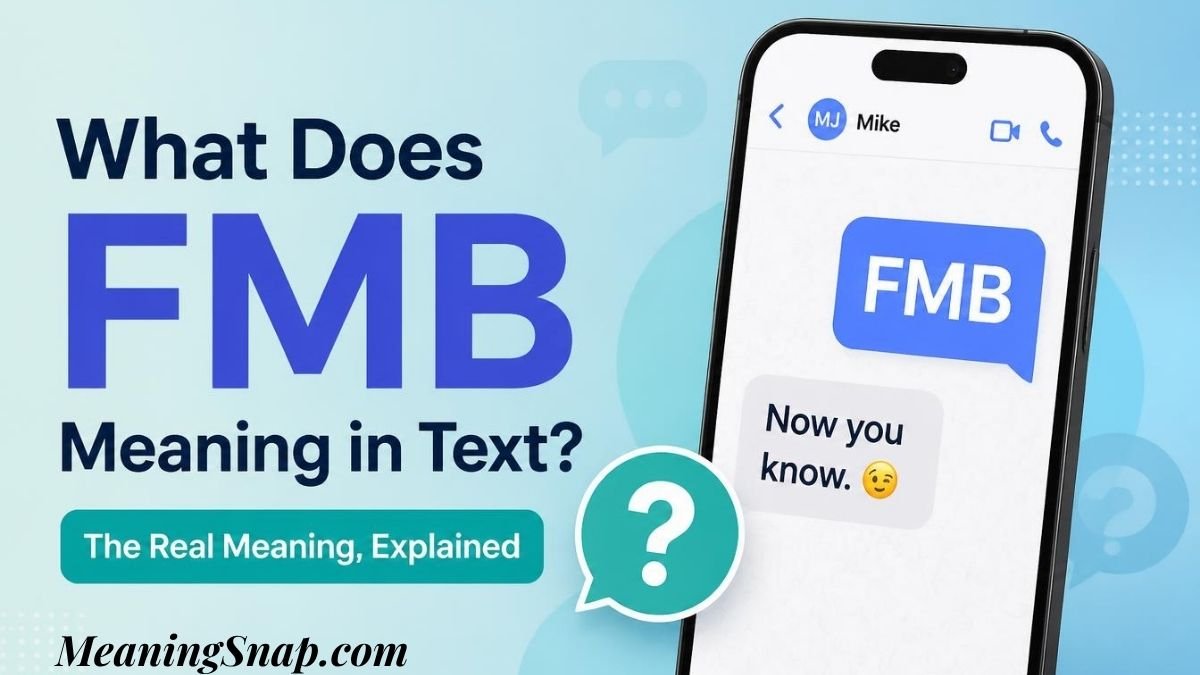
FMB meaning in text comes up a lot faster than you’d expect: you post a new photo, someone you don’t know follows you, and five minutes later they drop “FMB” in your comments. No context, no explanation, just three letters. FMB stands for “Follow Me Back,” and once you know that, half the confusing comment sections on Instagram and TikTok suddenly make sense.
Here’s the thing though. A lot of guides online throw five or six “possible meanings” at you and leave you more confused than when you started. FMB really only has one meaning you’ll run into in normal texting and social media, plus one legitimate unrelated meaning that shows up in a totally different context. That’s it. Let’s break down both.
FMB Meaning in Text: The Quick Answer
In texting and on social media, FMB means “Follow Me Back.” It’s a request, sometimes a demand, sometimes just a habit, asking the other person to follow your account after you’ve followed theirs.
Quick Answer: FMB = Follow Me Back. It’s used on Instagram, TikTok, and X when someone wants a mutual follow after following your account first. That’s the meaning you’ll see 95% of the time.
The FMB definition hasn’t really shifted since it first caught on. Unlike a lot of internet slang that mutates every year, this one has stayed pretty locked to one job: asking for a follow back. You’ll see it as a standalone comment (“FMB?”), tacked onto a compliment (“cute pics, FMB”), or sent straight in a DM. If you’re texting a friend and trying to figure out the FMB meaning in text, it’s almost always this exact request.
Where competitors’ guides tend to go wrong is treating FMB like it’s some mystery term with four or five equally likely meanings. It isn’t. If someone sends you FMB after following your account, they want a mutual follow. Nine times out of ten, that’s the whole story. The meaning of FMB only gets murkier once you leave social platforms entirely, which is a separate section below.
Read More slang Guide: WY Meaning in Text: What It Really Means & Examples
Where FMB Actually Comes From
FMB didn’t start as some official platform term. Nobody at Instagram or TikTok invented it. It grew out of a much older habit: people typing out “follow me back” one too many times and eventually just shortening it, the same way “for real” became “fr” and “be right back” became “brb.”
This kind of shorthand took off specifically because follower count became a visible, trackable number. Once platforms started showing follower counts publicly, growing that number turned into its own small game. Phrases like “follow for follow” and “follow me back” got typed out constantly in comment sections, and typing three letters instead of three words just made sense.
So FMB isn’t tied to one platform’s launch date or one viral post. It’s more like slang that evolved the same way most texting slang does: through repetition, not invention. It picked up steam alongside other follow exchange phrases and stuck around because it’s short, clear, and easy to type on a phone keyboard without thinking twice.
That’s also why FMB feels so at home in internet abbreviations culture generally. It follows the same pattern as ASAP, TBH, or IMO: a phrase people said often enough that shortening it became automatic.
Compare that to how slang usually spreads in online slang more broadly, through memes, songs, or a single viral post that everyone copies. FMB skipped that path entirely. It didn’t need a moment to go viral because the behavior behind it, chasing a bigger following, was already viral. The phrase just caught up to something people were already doing constantly across online platforms.
How People Use FMB on Instagram and TikTok
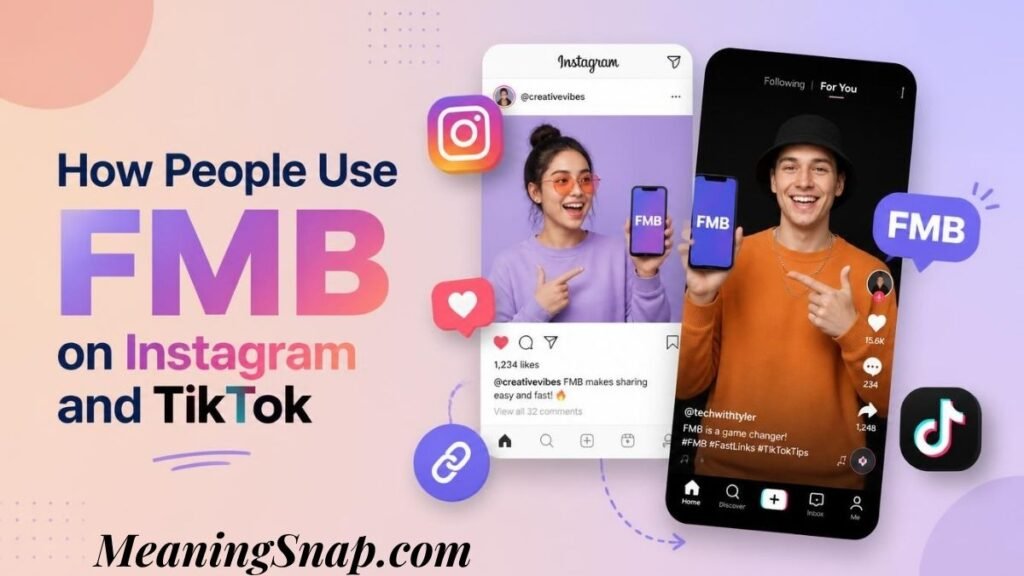
This is where FMB actually lives. On Instagram and TikTok, following and being followed back is a constant, low-stakes social exchange, especially among creators trying to grow their social profiles. The FMB meaning in text stays consistent here, it shows up in comments, captions, and direct messages, almost always tied to that follow exchange.
Here’s how it plays out in real conversations:
Example 1 Comment on a new post
Jess: love this pic!! FMB?
Maya: just followed you back 🤍
Example 2 DM after a follow
Alex: hey I followed you, FMB
Sam: done! love your feed
Example 3 Caption on a photo
“New page, trying to grow my TikTok profiles. FMB and I’ll return the favor 🎥”
Example 4 Sarcastic pushback
Devon: FMB???
Rae: bro we don’t even talk like that lol
Example 5 Follow train context
“Joining this follow train, everyone FMB and let’s all grow together 🚀”
That last example points to something worth knowing: FMB shows up a lot around “follow trains,” where a group of user accounts agree to follow each other in bulk to boost everyone’s numbers at once. It’s also common shorthand between creators who don’t personally know each other but are trying to build an audience, which is different from how you’d use it with an actual friend.
One more thing worth noting: tone matters here more than the words do. FMB from a stranger reads as transactional. FMB from someone flirting with you, or teasing you, can read completely differently even though the letters mean the exact same thing.
Read More: 304 Meaning: What Does 304 Mean in Slang?
What Does FMB Mean on Instagram from a Girl?
The meaning of FMB doesn’t change based on who’s sending it. Whether it comes from a girl, a guy, or an account you can’t identify at a glance, the message is the same: follow me back. FMB is a follow request, not a gendered phrase, and there’s no hidden version of it that means something different when a girl sends it.
That said, context still shapes how it lands. If a girl you’ve been flirting with on Instagram DMs you “hey I followed you, FMB,” it can feel more personal than a stranger dropping “FMB?” in your comment section. But that’s a tone thing, not a meaning thing. The same distinction applies the other way. If someone’s posting FMB in a follow-train caption or a mutual-follow comment thread, the gender of the poster is completely irrelevant to what they’re asking.
One place where “from a girl” search intent actually makes sense: dating apps and cross-platform situations where a match on one app sends you their Instagram and adds FMB. That framing does shift the meaning slightly, turning a social media follow into a soft signal of ongoing interest. Still a follow request, just a warmer one.
Is FMB Used on Snapchat or WhatsApp?
Not really, and there’s a clear reason why. Snapchat and WhatsApp aren’t built around visible follower counts or public social media accounts the way Instagram and TikTok are. Snapchat runs on private “friends,” not followers, and WhatsApp is just messaging, no public profile to grow at all.
You might occasionally see FMB pop up on Snapchat if someone’s cross-posting a request from Instagram (“added you on Snap, FMB on insta too”), but it’s not native to how Snapchat actually works. Same with WhatsApp: if FMB shows up there, it’s almost always someone referencing a different platform, not asking for anything Snapchat- or WhatsApp-specific.
So if you’re wondering whether FMB has some special Snapchat-only meaning, it doesn’t. It’s a follower-culture term, and Snapchat just isn’t built around followers the same way.
Read More: WYM Meaning in Text: Definition, Slang & Examples
FMB vs. FB vs. F4F vs. MFB What’s the Difference?
A handful of similar-looking abbreviations get thrown around in the same context, and they’re easy to mix up if you’re not scrolling this stuff daily. Here’s how they actually differ:
| Term | Meaning | Typical Platform | How It’s Used |
|---|---|---|---|
| FMB | Follow Me Back | Instagram, TikTok | Request sent after following someone, asking for a return a follow |
| FB | Follow Back | Instagram, TikTok, X | Confirmation that you did the follow back, or a shorter version of the request |
| F4F | Follow for Follow | Instagram, TikTok | Mutual agreement upfront: “I’ll follow you if you follow me” |
| MFB | short for “Mutual Follow Back” or a typo of FMB | Instagram, TikTok | Less common; usually means the same thing as FMB, just reordered |
The practical difference between these mostly comes down to timing and tone. FMB and FB describe an action already in motion, one person followed, now they’re asking for or confirming the follow back. F4F is more of an upfront deal, agreed on before anyone follows anyone. MFB isn’t standardized. Some people use it as shorthand for a mutual follow back, others just type the letters in the wrong order by habit. If you see it, treat it the same way you’d treat FMB.
You’ll also run into SFS (Shoutout for Shoutout) and L4L (Like for Like) in the same comment sections. Those aren’t about following at all, they’re about promoting each other’s posts or trading likes, but they travel in the same crowd of engagement-boosting shorthand.
What Does FMP Mean in Text, Is It the Same as FMB?
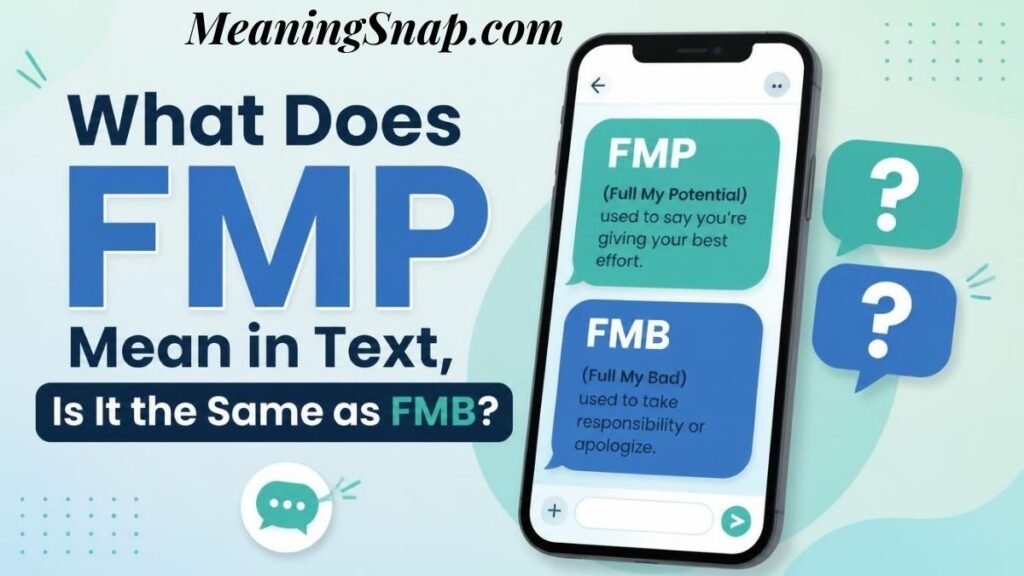
No, FMP is a different abbreviation entirely. People search for both because the letters look similar, especially when you’re reading quickly on a phone screen, and B and P are adjacent on a keyboard, so a typo isn’t out of the question either.
If you received what you thought was FMB but it actually says FMP, those are separate terms with unrelated meanings. They don’t share a definition or a context. FMP has its own meanings depending on where and how it’s used, and none of them overlap with “follow me back.”
The simplest way to handle this: look at the message again carefully. If it’s FMB, it’s a follow request. If it’s FMP, that’s a different conversation, and context in that specific message will tell you more than any general guide can.
Does FMB Ever Mean Something Else?
Outside of texting and social media, yes, FMB does show up as an abbreviation in a couple of unrelated professional fields, though it’s genuinely rare that you’d need to decode it this way in a normal conversation.
The most notable one is the Federation of Master Builders, a real UK trade association representing small and medium-sized building companies. It’s been around since 1941 and is well known in the UK construction industry, so if you’re reading a British news article or an industry newsletter and see “the FMB said today,” that’s almost certainly what it means, not anything about following someone back.
You’ll also occasionally find FMB used as internal shorthand inside specific companies or organizations and departments, things like a “Financial Management Bureau” in certain government or corporate contexts. These aren’t standardized corporate abbreviations that show up across industries. They’re organization-specific, meaning the same three letters might stand for something different at one company than at another.
Some technical fields also use FMB as a niche, internal abbreviation in areas like engineering documentation or specialized coding systems, but there’s no single, widely recognized meaning that crosses industries the way there is with the social media use. If you run into FMB in a very specific professional or technical document, the safest move is to check that organization’s own glossary rather than assume it matches any general definition.
None of these come up in text messages between friends. If a friend texts you FMB, it means follow me back, full stop.
Read Also: YFM Meaning in Text: What It Really Means & How to Use It
What Does FMB Mean According to Urban Dictionary?
Urban Dictionary has multiple entries for FMB, which is true of almost every popular abbreviation. The most voted-up definition, submitted in November 2020, simply says “follow me back” and uses an Instagram DM as the example. That lines up exactly with how FMB actually gets used across online platforms.
There are a handful of other entries on Urban Dictionary with very different meanings for FMB, including some that are crude or unrelated to social media. These exist the way most low-vote UD entries do: someone submitted them, they didn’t catch on, and they’re sitting several pages deep with minimal engagement. If you’ve seen a guide claiming Urban Dictionary defines FMB as something other than “follow me back,” they likely found one of those buried entries and treated it as the standard definition. It isn’t.
The short version: Urban Dictionary’s community consensus on the FMB meaning in text matches real-world usage. It’s a follow back request. The other definitions are outliers, not the norm.
How to Respond to an FMB Comment or DM
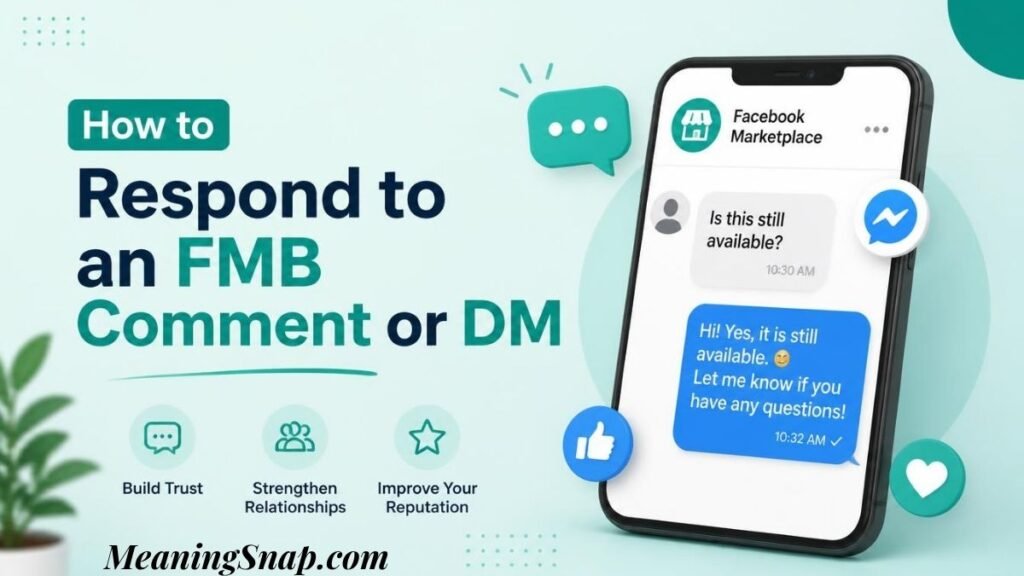
Responding to FMB is genuinely low-pressure. There’s no rule that says you have to follow someone back just because they asked.
A few realistic ways people handle it:
- Follow back if you actually like their content, no explanation needed
- Reply “just did!” or “done” to confirm you followed back
- Ignore it entirely if you’re not interested, it’s not considered rude in most online conversations
- Say something like “checking out your page” if you want to look before deciding
- Use it as a light joke back, “FMB? we’ll see 😂”, if you know the person
On dating apps and dating-adjacent chats, FMB sometimes gets used a little more playfully, almost like a soft way of saying “I want to keep this connection going,” since following someone’s Instagram is often the step right after matching. It still means the same thing, follow me back, it’s just wrapped in a slightly more personal context than a random comment section.
Is FMB Ever Used in a Funny or Sarcastic Way?
Yes, and more often than you’d think. Once people know what an abbreviation means, it becomes fair game for jokes. FMB is no different. The whole culture of follow-for-follow is already a little self-aware, there’s an inherent awkwardness to asking a stranger to follow you back, and people lean into that.
Here’s how it shows up in a humorous context:
Example 6 Self-deprecating caption
“I have 11 followers, nine of them are bots. FMB or I’ll be devastated 😭”
Example 7 Joking with a friend
Liam: I followed you on TikTok btw
Chris: oh wow so what do you want lmao
Liam: FMB obviously
The joke usually lands because FMB, at its core, is a pretty transactional request. When someone treats it like a desperate ask or uses it sarcastically on a close friend who obviously already follows them, the humor writes itself. You’ll also see FMB in meme captions poking fun at influencer culture, usually attached to an account with three posts and no content, which is a bit of a running joke in its own right.
So the “funny” version of FMB isn’t a different meaning. It’s the same meaning, just deployed with irony.
Common Mistakes People Make With FMB
A few mix-ups come up often enough that they’re worth clearing up directly.
The biggest one is assuming FMB always has some deeper or flirtatious meaning. Most of the time it doesn’t. It’s usually just someone trying to grow their following, nothing more loaded than that. Reading too much into a plain “FMB?” comment from a stranger is a fast way to misjudge the situation.
Another common mix-up is confusing FMB with MFB, especially since the letters are so similar. As covered above, they’re generally treated as interchangeable, but MFB isn’t as standardized, so don’t assume everyone uses it the exact same way.
The third mistake is using FMB somewhere it doesn’t belong, like a work email or a formal message. It’s strictly casual chats and social platform territory. Outside of that, it just reads as confusing rather than casual.
There’s also a smaller mistake worth flagging: assuming a follow back is owed just because someone used the term. FMB is a request, not an obligation. Plenty of accounts get dozens of FMB comments a day and only follow back a fraction of them, usually based on shared interests or genuine engagement rather than the comment itself. Treating it as a guaranteed trade is where a lot of the awkwardness in these exchanges actually comes from.
FAQs
What does FMB mean in text?
The FMB meaning in text is “Follow Me Back.” It’s used on social platforms, most often Instagram and TikTok, when someone asks for a mutual follow after already following your account.
Is FMB the same as F4F?
Not exactly. FMB is usually sent after someone has already followed you, asking for the follow back. F4F is more of an upfront trade, agreeing to follow each other before either person actually does.
What does FMB mean on Snapchat?
FMB isn’t really native to Snapchat, since Snapchat runs on friends rather than public followers. If you see it there, it’s usually referencing a follow request on a different platform, like Instagram.
What does MFB mean, and is it different from FMB?
MFB is generally treated as the same request as FMB, just with the letters reordered. It’s less common and less standardized, so context still matters more than the exact letters used.
Does FMB always mean “follow me back”?
In texting and social media, yes, almost always. Outside that context, it can rarely refer to unrelated things like the Federation of Master Builders in the UK, but that’s a completely different setting from a casual text or comment.
Is FMB used the same way by guys and girls?
Yes. The meaning doesn’t change based on who’s sending it. What changes is tone, a follow request from a stranger reads differently than the same three letters from someone you’re actually talking to.
Why do people use FMB instead of just typing “follow me back”?
Mostly speed. Comment sections and DMs move fast, and typing three letters is quicker than typing three words, especially on a phone. It’s the same logic behind most texting slang.
Bottom Line
FMB is one of the more straightforward pieces of digital language floating around right now. No hidden layers, no five competing definitions to memorize, just a quick way of asking for a mutual follow without spelling the whole thing out. Next time it shows up in your comments, you’ll know exactly what’s being asked, and whether you want to follow back is entirely up to you.

Alex Morgan is a writer focused on explaining slang, words, phrases, acronyms, and popular expressions in a simple and easy-to-understand way. Through clear explanations and helpful examples, Alex helps readers quickly understand what words and phrases mean and how they’re commonly used.