You’re scrolling through your friend’s Instagram story at midnight, and the caption says “LMS” with three question marks under it. Do you double tap? Leave a comment? Screenshot it and ask what she wants? If you’ve paused mid-scroll wondering about the LMS meaning before replying, you’re in good company. It shows up in captions, Snapchat messages, and random group chats, and somehow everyone else already knows what to do with it. It’s one of hundreds of small chat acronyms built into daily digital communication now.
Here’s the thing. It’s a lot simpler than it looks, and once you get it, you won’t hesitate over an LMS text again. No detective work required, three letters with a quick answer waiting on the other side.
What Does LMS Mean?
In almost every case, LMS stands for “Like My Status.” It started as a straightforward request. Someone posts something and wants people to react, so instead of typing out a full sentence, they shorten it to three letters, a small piece of internet shorthand built for speed.
Quick Answer: LMS usually means “Like My Status,” a request for people to like or react to a social media post. On Instagram or TikTok, it often reads as “like my post” or “like my story” instead, same idea, adapted to the platform.
You’ll mostly see it attached to a status update, a story, or a caption, wherever someone wants a little social media engagement without spelling it out. It belongs to a larger family of texting abbreviations that focus on asking for interaction rather than demanding it outright, which somehow feels less awkward for everyone involved.
A handful of sites also list “Let Me See” as an occasional alternate reading. It’s rare enough to skip in daily use, and you’re unlikely to run into it outside a specific inside joke or a one-off local trend.
There’s a small reason abbreviations like this stick around instead of fading out. Typing “please like my status” out loud, so to speak, puts the request front and center, which tends to feel a bit exposed. Shrinking it to three letters softens the ask. It reads more like a shared bit of social media vocabulary than a direct plea for attention, even though the meaning underneath is identical either way.
The phrase behind LMS meaning in text hasn’t changed much since it started. What’s changed is where you see it. It used to live almost entirely on Facebook. Now it shows up anywhere people post updates other people might react to, which covers nearly every app with a like button.
Where LMS Came From
LMS slang goes back to Facebook’s early status update era, when posting frequently and getting likes on those posts felt like genuine social currency. Writing out “please like my status” felt clunky, so users compressed it down to the fewest letters carrying the same meaning, the way most texting shorthand gets built.
Facebook status culture is the origin point here. People posted updates about their day and tacked “LMS” on the end to nudge friends into interacting instead of scrolling past. It worked because it stayed short enough to avoid sounding needy, and clear enough for nobody to question what it meant.
As Instagram, Snapchat, and eventually TikTok pulled attention away from Facebook, the phrase traveled with the users, not the platform. People kept the shorthand and swapped the object of the request. A status became a post, then a story, then a video, but the ask underneath stayed the same, notice this, react to this.
The word “status” barely applies to modern feeds anymore, yet the shorthand outlasted the feature it was named after. It’s a small detail, but it says something about how internet slang spreads. The letters stay fixed even when the thing they’re describing changes shape entirely. LMS is a small piece of social media vocabulary that outlived the platform it was born on, and part of why it still makes sense today, even though almost nobody posts literal Facebook statuses anymore, comes down to this survival. Shorthand tends to stick once it earns a spot in daily habit, long after the original feature fades into the background.
Read Also: NMMS Meaning in Text: What It Really Means in Messages & Social Media
LMS on Instagram, Snapchat, and TikTok
The LMS meaning in texting shifts enough between apps to trip people up, so here’s how it plays out platform by platform.
On Instagram, LMS usually shows up in a story or caption, and the ask stays simple: tap the heart or drop a comment. Some people pair it with other engagement requests, like an “LMS for a tbh” or an invite into a rating game, where friends trade an honest opinion in exchange for the like.
LMS on Snapchat tends to appear inside a chat rather than a public caption. A friend might send an LMS message directly, asking for a like on their most recent story, folded into a normal DM the same way you’d ask a favor in person.
LMS on TikTok comments works a bit differently. It shows up less as a personal ask and more as a comment left under someone else’s video, sometimes as a joke, other times as a genuine sharing request meant to boost engagement.
On Discord, Reddit, or Twitter/X, LMS in the “like my status” sense barely shows up. Those platforms don’t carry a “status” feature the way Facebook or Instagram do, so LMS spotted in a Discord server or a gaming chat likely points to something else entirely: a game lobby update or, inside a school-related channel, an entirely different meaning behind these three letters, covered next.
Read Also: DBL Meaning: Definition, Abbreviation & Common Uses
LMS vs. Learning Management System
Outside slang, LMS almost always means Learning Management System, the software schools and workplaces use to host online courses, assignments, and training modules. It’s a completely different world from the casual version, and mixing the two up leads to some genuinely funny confusion.
Picture a student in a class group chat typing “check the LMS for the homework,” and a friend replies asking why the teacher wants likes on a status update. This mix-up happens more often than people expect, especially among younger students who learn the slang version first and run into the education one later.
Context separates the two. LMS in a caption, a story, or a text between friends almost always points to the social media version. LMS in a school email, a syllabus, or a workplace message about training points to the software.
A Learning Management System handles the unglamorous side of education and corporate training, hosting course materials, collecting assignments, running quizzes, and tracking grades or completion rates in one dashboard. Universities lean on it for entire online courses, and companies use it for employee onboarding and compliance training. Popular examples include platforms like Canvas, Moodle, and Blackboard, tools built for tracking learning progress rather than social validation, a world away from the casual, friendly nudge the same three letters carry in a text. None of it overlaps with the texting version in any way beyond the shared letters.
Both meanings stay legitimate and both stay common, living in completely separate corners of daily life. Nobody uses the slang version to talk about coursework, and nobody logs into a Learning Management System expecting a like button.
LMS in Real Conversations
A definition only goes so far. Here’s what LMS looks like once it lands in a real conversation, across a few different tones.
Casual, low stakes:
“posted a new pic, lms if ur not busy 😩”
“already did lol you already knew I would”
A little sarcastic:
“lms bc apparently I need validation today”
“couldn’t relate more honestly, done”
Sincere, not joking around:
“hey lms on this one, I feel good about how it turned out”
“done, you look amazing, stop doubting yourself”
Mixed into a rating game:
“lms and I’ll give you an honest opinion on your pfp, no cap”
“deal, liked it, don’t hold back”
Rare, joking Twitter/X usage:
“lms and I’ll quote tweet you, no I won’t lol”
“typical twitter behavior honestly”
Confused about which meaning:
“don’t forget to check the LMS before class tomorrow”
“wait is this the insta thing”
“No lol, the actual school website”
Each exchange uses the phrase a little differently, though the letters mean the same thing in five out of six. Sarcastic LMS still wants a like, wrapped in a joke about needing attention. Sincere LMS shows up when someone feels proud of something and wants the reassurance to land as real, not performative. The rating game version turns LMS into a small toll, a like traded for an honest opinion, so both sides get something out of it. And the confused exchange shows the one real trap with these three letters, the same acronym pointing to two unrelated worlds depending on who’s typing and where.
Read Also: Tried and True Meaning: Definition, Examples & Usage
Quick Reference Table
If you want the short version without scrolling back through everything above, here’s a quick breakdown of where LMS shows up and what it usually means in each spot.
| Platform / Context | What LMS Usually Means | Example |
|---|---|---|
| Like My Status | “New job today, LMS!” | |
| Like my post or story | “LMS on this one 🥺” | |
| Snapchat | Like my story or snap | “lms on my story pls” |
| TikTok | Engagement request on a video or comment | “lms fr this deserves more likes” |
| School or Work | Learning Management System | “Assignment’s posted on the LMS” |
| Discord / Reddit / Twitter (X) | Rarely used this way | Usually points to something else entirely |
The LMS meaning stays fixed everywhere it travels, only the object of the request changes from a status to a post to a story to a snap. Social media trends shift quickly, but the letters behind LMS have stuck around through several platform cycles now. Save this table for the next time it shows up somewhere unexpected and a fast answer beats a full explanation.
Does Using LMS Make You Look Attention-Seeking?
This same LMS meaning, a request for interaction, sits inside a bigger category of texting abbreviations built around asking for engagement. Terms like L4L (like for like), F4F (follow for follow), and S4S (share for share) work the same way, a direct trade where engagement buys engagement back. LMS reads as the softer cousin of this group, less transactional, more of a casual nudge.
Whether it reads as needy or normal depends on who sends it and how often. Sent once in a while between close friends, it barely registers as anything beyond a quick favor. Sent under every single post, it starts to look like engagement bait, and most people spot the pattern fast.
A generational split shows up here too. Older Millennials remember LMS from its Facebook status heyday, when asking for likes felt less loaded than it does now. Younger users tend to use it more ironically, tossing it into a caption as a joke about wanting attention rather than a genuine request.
LMS sometimes travels next to other small requests in the same chat, a photo request, a screenshot request, or an invite to trade honest opinions, all part of the same casual texting habit of asking for a little attention without asking directly.
For parents thinking about kids online safety, an occasional LMS isn’t worth worrying over. It reads closer to a digital version of asking a friend to notice a new haircut. A pattern of constantly chasing likes and comments deserves a gentler conversation and a little parental guidance, not because the word itself causes harm, but because it sometimes points to bigger questions about validation and social pressure worth talking through directly.
There’s also a difference between LMS used as a one-off favor and LMS used as a running bit between two specific people. Best friends who trade “lms” under every post usually aren’t chasing outside validation at all, they’re keeping a small inside joke alive. Strangers or new followers reading the exchange without the history behind it are the ones most likely to misread it as attention-seeking.
Used sparingly, LMS stays harmless. Used as a personality, it starts to say more than the poster intends.
Not every LMS needs a like in response either. A simple “saw it, love this” works fine if you’d rather leave a comment than tap the heart, and most people asking for LMS care more about being noticed than about the specific button pressed. Ignoring it once in a while doesn’t carry much weight, since these requests get sent out fairly casually and rarely come with real expectations attached.
The letters don’t stop at texting and school portals either. LMS shows up across a handful of unrelated fields, and knowing which meaning fits the moment saves a lot of confusion.
Read More: WYF Meaning in Text: What It Really Means (You’ll Be Surprised)
LMS Meaning in Text
In a direct text message between two people, LMS still points to “Like My Status,” though it shows up less often here than on social apps, since a regular SMS or iMessage thread doesn’t come with a status to like. Most often it appears when someone mentions a post or story they shared elsewhere and wants a like on it specifically.
Example: “hey lms on my insta story when you get a sec”
LMS Meaning on Snap
On Snapchat specifically, LMS usually means “like my story,” a request for a view or a reaction on whatever a friend posted. It lives inside the chat window more than a public caption, sent directly between friends rather than broadcast wide. Since Snapchat tracks friendship through streaks and a best friends list, a quick LMS between close friends works as a small nudge to stay visible on each other’s radar between streak snaps.
Example: “lms on my story, tryna hit 100 views 👀”
LMS Meaning in AI
Outside slang, LMS in artificial intelligence and signal processing usually refers to the Least Mean Squares algorithm, a method which gradually adjusts a system to shrink the gap between a predicted output and the real one. Bernard Widrow and Ted Hoff developed it back in 1960, and it remains a foundational tool in adaptive filtering, noise cancellation, and early machine learning models. Nothing about this meaning connects to the texting version beyond the shared letters.
Example: “The LMS algorithm updated the filter weights after each new sample.”
LMS Meaning in Gaming
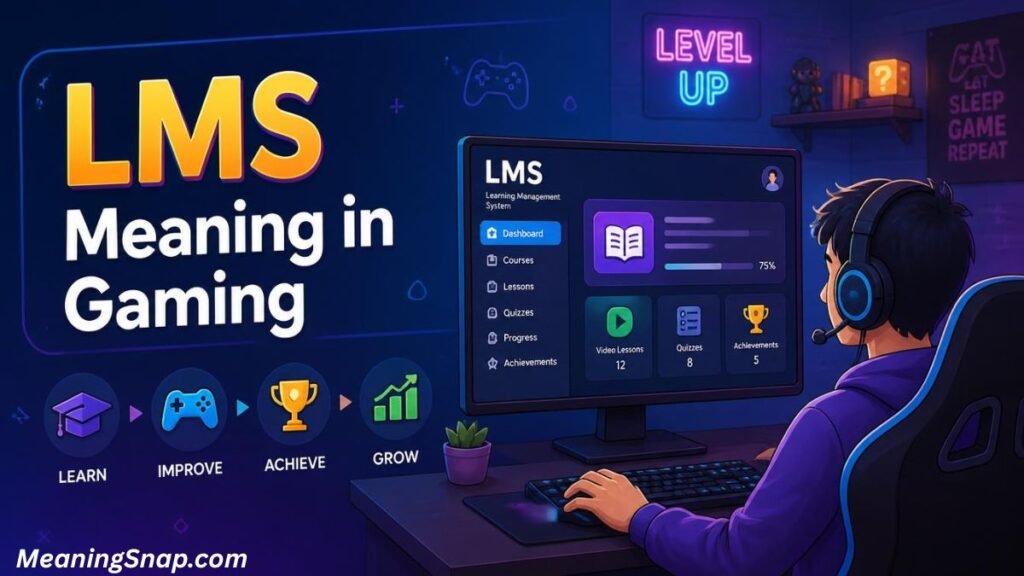
In gaming, LMS usually stands for “Last Man Standing,” a mode where players fight until only one person or team survives. It shows up across battle royale titles and competitive shooters, and Old School RuneScape runs an official minigame under this exact name. The core idea stays fixed everywhere it appears, eliminate everyone else and remain the one left standing when the match ends.
Example: “Queued up for LMS again, hoping to survive past the first zone this time.”
LMS Meaning in School
In an academic setting, LMS points back to Learning Management System, the online portal a school uses to post assignments, grades, and course materials. Canvas, Google Classroom, and Blackboard count among the most common platforms students run into under this label. A teacher mentioning “the LMS” in an email or a syllabus means this portal, not the slang version from a group chat.
Example: “Your essay is due through the LMS by Friday at midnight.”
LMS Meaning Examples
Here’s a quick set of one-liners showing how LMS shifts depending on where it lands.
- Social media caption: “LMS if you read this far”
- Snapchat chat: “lms on my story pls”
- Gaming lobby: “last match was rough, running LMS again”
- School group chat: “check the LMS before the quiz tomorrow”
- Casual text: “lms, bored rn”
LMS Meaning in Music
Among audio and home-theater hobbyists, LMS often points to Logitech Media Server, now renamed Lyrion Music Server, an open source program built to stream a personal music collection to Squeezebox devices and other networked players. It’s a niche meaning mostly known among people setting up their own multi-room audio systems, with no real connection to the social media slang.
Example: “Finally got LMS running on my Raspberry Pi for whole-house audio.”
LMS Meaning in Medical Terms
In medical contexts, LMS most often stands for leiomyosarcoma, a rare and aggressive type of soft tissue cancer developing in the abdomen, the uterus, or elsewhere in the body. This is a serious diagnosis, and anyone who has seen LMS written on a scan or a medical report deserves a direct conversation with a doctor about what it means for their specific situation, not a slang guide.
Example: “The biopsy results confirmed a diagnosis of LMS.”
Frequently Asked Questions
What does LMS mean in a text message?
LMS meaning in a regular text almost always points to “Like My Status,” a nudge asking someone to react to a post shared elsewhere, since standard texting apps don’t have a status feature of their own.
What is the full form of LMS?
There’s no single full form. On social media, it spells out “Like My Status”; in school or work, it stands for “Learning Management System”; and in gaming, it means “Last Man Standing.”
What does LMS mean on Instagram?
On Instagram, LMS usually asks for a like or a reaction on a story, post, or caption, sometimes paired with a rating game like an “LMS for a tbh.”
Does LMS mean the same thing on every app?
No. The core LMS meaning shifts by platform. It’s an engagement request on Instagram, Snapchat, and TikTok, but a school portal in an email or syllabus, and a survival game mode in a gaming chat.
What does LMS mean in a gaming chat?
In gaming, LMS stands for “Last Man Standing,” a mode where the last player or team left alive wins the round, common across battle royale titles and competitive shooters.
Is it rude to ignore an LMS request?
No. It’s a casual ask, not an obligation, and friends rarely keep track of whether every single one gets a response.
What does LMS mean at school or work?
In an academic or workplace setting, LMS points to a Learning Management System, the online portal used for assignments, grades, and training modules like Canvas, Moodle, or Blackboard.
Conclusion
Next time an LMS shows up in your DMs or under a story, you’ll know exactly what’s being asked and how to respond. You’ve got the full LMS meaning locked in now, from its Facebook throwback roots to its spot as an everyday piece of internet vocabulary. It’s a quick nudge dressed up as three letters, easy to send, easy to answer. Whether you tap the like button, drop a comment, or reply with something sincere, you’re already fluent in this one.

Alex Morgan is a writer focused on explaining slang, words, phrases, acronyms, and popular expressions in a simple and easy-to-understand way. Through clear explanations and helpful examples, Alex helps readers quickly understand what words and phrases mean and how they’re commonly used.