You’re mid-scroll through Snapchat when a notification pops up: just three letters, wsp, sitting there with no punctuation and no context. If you’ve ever paused wondering what that person wants from you, you already get why so many people search for WSP meaning in text every single day. Here’s the thing: it’s not complicated once you know it, but it does have more than one layer. Turns out, that same three-letter message means something slightly different depending on who sent it and where. Some people mean it as a plain hello. Others use it as shorthand for an entirely different app. By the end of this, you’ll know exactly which one you’re dealing with and how to answer either way.
What Does WSP Mean in Text?
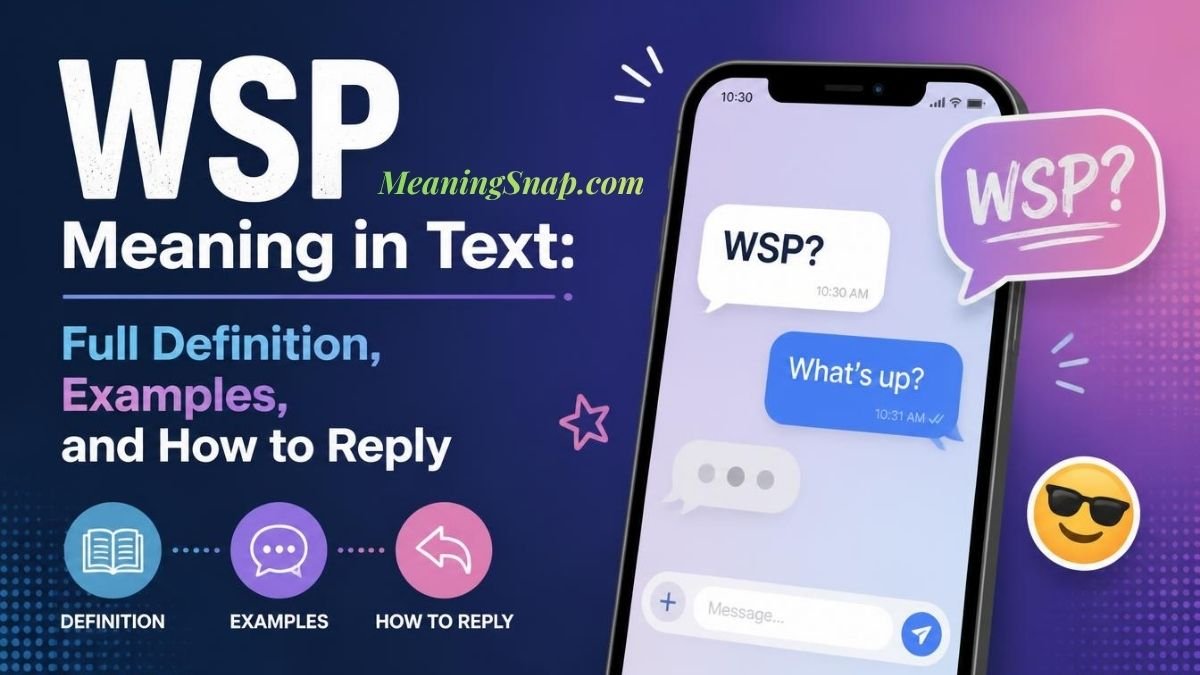
What does WSP mean in most conversations? It’s short for “what’s up,” used the same way you’d use “hey” or “how’s it going.” Someone sends you “wsp” over a text message, a DM, or a group chat, and they’re asking how you’re doing, what you’re up to, or just saying hello without typing out a full sentence. If you’ve landed here searching WSP meaning in text, this is the answer covering nearly every case.
The WSP definition stays consistent no matter which app it shows up on. It’s a casual greeting, nothing more, nothing less. You’ll see it open a conversation (“wsp, you around this weekend?”) or drop into the middle of one as a check-in (“wsp with the group project, did you finish your part?”).
What makes WSP different from spelling out “what’s up” is speed. Typing three letters beats typing nine, and in texting culture, speed matters. That’s the entire reason abbreviations like this exist in the first place, not because people are lazy, but because fast, low-effort messaging is the norm now.
One thing worth clearing up early: WSP isn’t asking a deep question. Nobody expects a detailed life update. A one-word reply like “nm” (not much) or “chilling” covers it completely. Think of it this way: WSP is less a question and more a nudge, a way of saying “I’m here, let’s talk” without the pressure of a full opener.
Read New article: CFS Meaning Slang: What Does CFS Stand For in Texting & Social Media?
Where WSP Came From
Understanding the full WSP meaning in text helps to know where the abbreviation came from. WSP didn’t appear out of nowhere. It’s a shortened version of “wassup,” itself a casual spelling of “what’s up” that had already been part of spoken slang for decades before texting existed. Once instant messaging and early texting took off in the early 2000s, people started clipping phrases down to save keystrokes, and “wassup” got trimmed to four letters, then eventually to three.
Slang databases place WSP in regular online use since at least the early 2000s, right alongside other clipped greetings from that era like “sup” and “hru.” It wasn’t invented by one platform. It spread the way most texting slang does, through group chats, early messaging apps, and word of mouth, long before Snapchat or Instagram existed.
What’s kept WSP alive for over two decades, while plenty of other 2000s-era slang faded out, is how flexible it is. It works as a private message opener, a group chat check-in, or a Snapchat caption. It never needed to be reinvented for each new platform. It just kept getting copied over, which is part of why it still feels current instead of dated.
Is WSP the Same as WhatsApp?
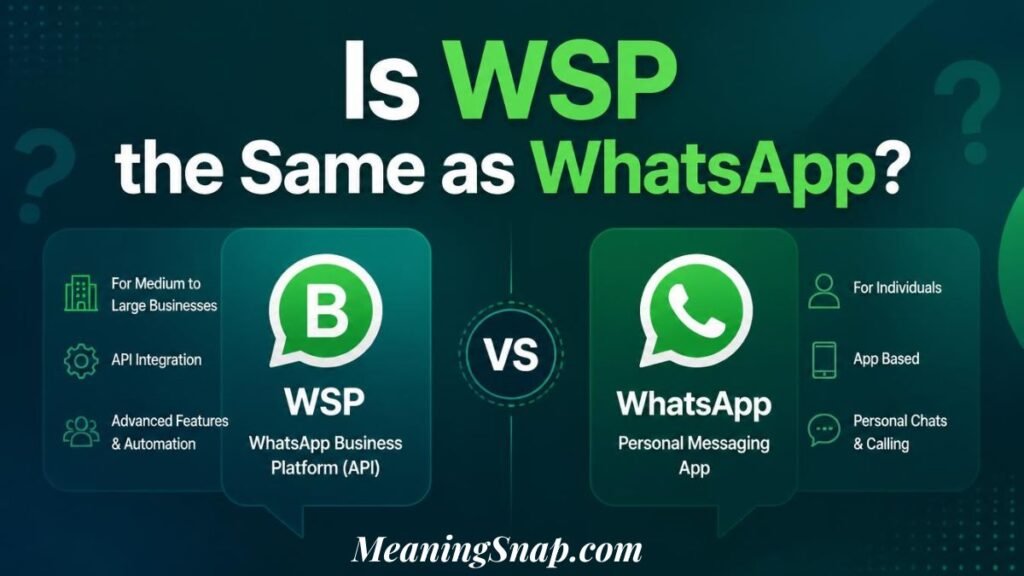
Here’s where most guides stop short. WSP has a second, separate meaning that has nothing to do with greetings: in Spanish-speaking communities, “wsp” is common shorthand for the messaging app WhatsApp itself. Someone might text “mándame un wsp” (send me a WhatsApp message) or “te escribo por wsp” (I’ll write to you on WhatsApp).
This isn’t a stretch or a rare exception. It’s an established use, especially across Latin America and Spain, and it shows up in US and UK group chats too, particularly among bilingual friend groups or anyone who’s picked up slang from Spanish-speaking contacts. In this context, WSP isn’t a question at all. It’s a noun, standing in for the app the same way “insta” stands in for Instagram.
So how do you tell the two apart? Context does the work. “Wsp?” on its own, especially as an opener, almost always means the greeting. “Send it on wsp” or “I’ll hit you on wsp” is talking about the app. You won’t usually see both meanings collide in the same message, so once you spot which pattern you’re looking at, the confusion clears up fast.
This is the piece most WSP explainers skip entirely, treating the term like it only has one job. It has two, and they don’t overlap.
Read Also: What Does WYLL Mean in a Text? The Complete Guide to This Gen Z Slang
WSP vs Similar Text Slang
WSP isn’t the only short greeting floating around your texts, and it’s easy to mix it up with SUP, WYD, or HRU since they all do roughly the same job. They’re not identical though, and knowing the small differences helps you reply appropriately. Here’s how they compare:
| Term | What It’s Asking | Formality | Typical Reply |
|---|---|---|---|
| WSP | What’s up / how’s it going | Extremely casual | “Nm, wbu?” |
| SUP | What’s up (shorter, blunter) | Extremely casual | “Not much” |
| WYD | What are you doing right now | Casual | “Just chilling” or an activity |
| HRU | How are you | Casual, slightly more sincere | “I’m good, hru?” |
The biggest difference is what each one is digging for. WSP and SUP are open-ended, working as a general casual greeting. WYD wants a specific activity in return. HRU leans closer to checking on someone’s wellbeing than their plans. Swap WSP in where WYD belongs and the conversation still works, but you might get a vaguer answer than expected since the question itself is broader.
Examples of WSP in Real Conversations

Reading about WSP in the abstract only gets you so far. Seeing it in actual back-and-forth text conversations makes the tone and timing click faster. Here are five conversations that show how differently the same three letters can land depending on who’s sending them.
A regular catch-up between friends:
Priya: wsp? haven’t talked in forever
Noah: lol I know, work’s been insane. wsp with you?
A Snapchat streak opener:
Zoe: wsp 👀 [sends a photo of her dog]
Marcus: omg he’s gotten so big, wsp with him lately
A dating app icebreaker:
Liam: hey wsp, saw you’re into hiking too
Ava: wsp! yeah just got back from a trail tho
A gaming lobby before a match:
Diego: wsp, you queuing up?
Theo: yeah give me two mins
A sarcastic reply after being left on read:
Jordan: wsp
Casey: oh NOW you text me. ignore me for a week and suddenly it’s “wsp” 😒
Notice how the tone shifts entirely based on context, not the word itself. The gaming example is purely functional, almost like saying “ready?” The dating app version carries a hint of interest without trying too hard. Casey’s reply shows exactly how WSP can land badly when it follows a long silence, since a generic greeting after ghosting someone tends to read as low-effort no matter how it’s meant.
How to Reply to “WSP?”
Replying to WSP doesn’t need to be complicated, but the right tone depends on who’s asking and what kind of energy you want to bring back. Here’s how to match it.
Casual Replies
Keep it short and match the low effort of the original message. Something like “nm, wbu” or “not much, just relaxing” does the job without overthinking it. This is the safest default for friends, classmates, or anyone you’re not trying to impress.
Flirty Replies
If the WSP came with a wink emoji or showed up late at night, a little playfulness back doesn’t hurt. Try “just thinking about texting you first” or “wsp yourself, stranger.” Keep it light unless you’re sure the interest is mutual.
Busy Replies
When you genuinely don’t have time to chat, a quick honest reply beats leaving someone on read. “Swamped rn, talk later?” or “at work, hmu tonight” keeps the door open without committing to a full conversation.
Funny Replies
Sometimes the best move is leaning into how vague the question is. “The sky, mostly” or “existing, barely” gets a laugh and still counts as an answer. This works best with friends who already get your sense of humor.
Also Read: BBG Meaning in Text: What It Really Means and How to Use It
Wsp Meaning in Text: The Funny Side
Not every WSP question is a serious one. A chunk of people searching wsp meaning in text funny are after the joke answers, not the real definition, and there are a few worth knowing.
The most common one floating around slang forums is mishearing WSP as something completely unrelated, like a made-up “Wisconsin Society for Poetry,” a running joke that works because the real abbreviation looks nothing like what it spells out once you say it in full. Group chats also stretch WSP into “what’s poppin'” or “what’s the plan” as a half-joking variation, especially when someone’s teasing a friend for texting too formally. Tech-minded users sometimes throw out “Wireless Session Protocol” as a deadpan wrong answer too, a real but unrelated networking term that has nothing to do with texting.
None of these jokes replace the real definition, they’re proof that a three-letter abbreviation is vague enough for people to have fun with. If a friend fires back a ridiculous fake definition when you ask what WSP means, they’re most likely joking rather than genuinely confused, and playing along is usually the right move. For actual joke replies to send back when someone texts you wsp, the Funny Replies section above already covers that ground, this part is just about the joke definitions people go looking for.
Is WSP Rude or Flirty? (Tone Check)
On its own, WSP isn’t rude and it isn’t flirty either. It’s neutral, closer to “hey” than to anything with a hidden agenda. The tone shift, when there is one, comes from everything around the word rather than the word itself.
A plain “wsp?” from a friend you talk to regularly reads exactly how it looks: casual and friendly. Add a winky emoji, send it late at night, or pair it with a compliment (“wsp cutie”) and the same three letters suddenly carry a different weight. Punctuation matters too. “Wsp.” with a period can come across as flat or even annoyed, while “wsp!” or “wsp?” feels open and inviting.
Where WSP can feel rude is timing, not phrasing. Sending it after ignoring someone’s texts for a week, or using it as the entire message with zero follow-up, can come off as low-effort. It’s not the greeting that’s the problem, it’s what it’s replacing. A one-word opener after a long silence tells the other person you didn’t put much thought into reaching out, even if that’s not what you meant.
Bottom line: WSP takes its tone from the relationship and the context around it, not from the letters themselves.
Does WSP Mean Something Different From a Guy or a Girl?
Short answer: no, not inherently. The letters don’t carry a different meaning based on who’s typing them. What changes is the context people read into it, especially in a dating or crush situation, and that’s usually where searches like “wsp meaning in text from a guy” or “what does wsp mean from a girl” come from.
If a guy sends “wsp” out of nowhere, especially after viewing your story or right after a match, people often go looking for a hidden signal. The honest read: it’s the same low-effort opener anyone sends when they want to start something without overthinking their first line. It doesn’t confirm interest on its own, but it’s rarely completely neutral either, since most people don’t randomly text someone they don’t care about at all.
The same logic applies coming from a girl. A random “wsp” isn’t automatically flirty, and it isn’t automatically platonic either. What tells you something is what happens next: whether they keep responding, ask questions back, or let the conversation die after one reply. WSP starts the conversation. It doesn’t finish the job of telling you how someone feels.
If you’re trying to read into a “wsp” text, look at the pattern around it rather than the word itself. Three letters can’t carry that much information alone, no matter who sent them.
When to Use WSP (and When to Skip It)
Knowing the WSP meaning in text only helps if you also know where it belongs. WSP fits naturally into casual, low-stakes conversations. Texting friends, sliding into a group chat, checking in with someone you’re already close with, these are exactly the situations it was built for. It works especially well as an opener when you don’t have a specific reason to reach out and just want to say hello.
Skip it in professional communication. A work Slack message, a client email, or anything going to your manager should stick to full words. “Hi, checking in on the project status” reads as competent. “Wsp with the project” reads as careless, even if that’s not your intent. The same logic applies to academic correspondence, professors and admissions offices expect formal language regardless of how casual your texting habits are elsewhere.
There’s a middle ground too. Some casual workplaces, especially younger teams communicating over Slack or Discord for informal channels, tolerate WSP and similar slang in non-client-facing chat. Even then, it’s worth reading the room first. If your coworkers already text you in shorthand, matching that tone is fine. If they don’t, default to full sentences until you know their style.
The simplest rule: use WSP anywhere you’d naturally say “hey” out loud, and avoid it anywhere you’d need to sound polished on paper.
Where You’ll See WSP
The WSP meaning in text stays the same everywhere, but how it shows up changes by app, and knowing the pattern helps you read the message correctly before you even reply. Here’s a quick breakdown of where it tends to show up and how it behaves on each platform.
- Snapchat: extremely common as a streak opener or caption on a snap, often paired with a photo instead of standing alone.
- Instagram: shows up in DMs and story replies, usually as a casual conversation starter after someone views your story.
- TikTok: less common in private messages, more common in comment sections and duets, sometimes used almost as a meme rather than a literal question.
- WhatsApp: ironically common here too, both as the greeting and, especially among Spanish-speaking users, as shorthand for the app itself.
- Discord and gaming chats: functions almost like a check-in before a match starts, closer to “ready?” than a real question about someone’s day.
Group chats treat WSP a little differently than one-on-one DMs. In a group setting, it’s often less about getting an answer from one specific person and more about signaling “I’m here, what’s going on with everyone.” Nobody expects a full response from every member, unlike a direct message where leaving it unanswered can feel like a snub.
The common thread across every platform is speed and low commitment. WSP exists because typing three letters into a fast-moving DM or comment thread beats typing nine, no matter which app you’re using.
Wsp Meaning on Snapchat
Snapchat is arguably where WSP shows up more than anywhere else, which is why wsp meaning in snapchat gets searched almost as often as the general term. The meaning doesn’t change on the app, it’s still “what’s up,” but Snapchat’s format shapes how it gets used.
Streaks are the biggest factor. When two people have an active streak going, a quick “wsp” snap or chat message often gets sent purely to keep the streak alive, not because either person has something specific to say. It’s less a real question and more a low-effort placeholder, similar to sending a blank photo just to maintain the flame emoji next to a friend’s name.
WSP also shows up as a caption on an actual snap rather than a text message, paired with a selfie, a random photo, or a screenshot, functioning almost like a visual version of saying hello. Because snaps disappear after being viewed, WSP fits the app’s throwaway, low-stakes tone better than almost any other platform.
One distinction worth knowing: a “wsp” sent in Snapchat Chat behaves like a normal DM and expects a reply, while a “wsp” used as a snap caption is often more of a passive greeting that doesn’t require a response at all.
Who Still Uses WSP
WSP skews younger, but it’s not locked to one generation the way some slang is. Gen Z uses it constantly, often without thinking twice, since it’s been part of their texting vocabulary since middle school. Millennials use it too, though usually alongside the fuller “what’s up” rather than replacing it entirely, a habit left over from texting before abbreviations took over completely.
Older users recognize it less consistently. Someone outside regular texting culture might read “wsp” and genuinely not know what it means, which is exactly why it shows up in “what does this mean” searches so often. That confusion isn’t a knock on anyone, texting slang moves fast, and nobody’s expected to keep up with all of it.
What hasn’t changed much is who WSP is for. It’s built for people already comfortable with informal digital communication: friends, classmates, teammates, people you don’t need to impress. The generational gap isn’t strictly about age as much as it’s about how much time someone spends texting casually versus writing in fuller sentences by habit. That’s also why WSP rarely causes real offense even when someone doesn’t recognize it right away. Confusion, not annoyance, is the usual reaction.
Does WSP Stand for Anything Else?
Outside of texting slang, WSP is also a real acronym in a few unrelated fields, and it’s worth knowing so you don’t confuse a search result meant for one with a definition meant for the other.
Did You Know? WSP Global Inc. is an actual multinational engineering and professional services firm, headquartered in Montreal, with offices worldwide. If you see “WSP” in a business or construction context, this is most likely what’s being referenced, not texting slang.
In the US, WSP is also the standard abbreviation for the Washington State Patrol, the state’s law enforcement agency. You’ll see it on official documents, news coverage, and road signage in Washington State, again with zero connection to the texting version.
In social justice and academic writing, WSP occasionally stands for “white skin privilege,” a term used in discussions of race and systemic advantage. This usage is older and far less common in everyday texting than the “what’s up” meaning, but it does appear in specific academic or activist contexts.
None of these definitions overlap with the texting slang version. If a message came from a friend, group chat, or social media DM, you’re dealing with the greeting. If it showed up in a news article, an official document, or a construction report, it’s one of these other meanings entirely.
WSP Meaning in Business and Sales
Away from texting entirely, WSP has a specific meaning in retail, wholesale, and sales contexts: it stands for Wholesale Price, the per-unit price a retailer pays a supplier or manufacturer before marking the item up for resale. This shows up regularly in B2B commerce, inventory spreadsheets, and pricing agreements, and it’s a completely different WSP from the texting greeting or the WhatsApp shorthand covered earlier.
You’ll typically see WSP paired with related terms like RSP (retail sale price) or MSRP (manufacturer’s suggested retail price) in pricing sheets, contracts, and wholesale platforms. A line like “WSP: $12, RSP: $24” tells a retailer exactly what they’ll pay versus what they can charge, a straightforward markup calculation used across wholesale and B2B commerce.
If you came across “WSP” in a supplier catalog, a pricing contract, or an inventory system, this business definition is most likely the one in play, not the texting slang. The two meanings share letters and nothing else, so context, whether it’s a group chat or a spreadsheet, tells you immediately which one you’re looking at. It’s worth knowing both, since searching “WSP meaning” pulls results for the texting slang and the pricing term side by side, and picking the wrong one can make a business email genuinely confusing.
FAQ
What does WSP mean in a text message?
WSP is texting shorthand for “what’s up,” used as a casual greeting or check-in. The short answer to WSP meaning in text is that it works the same way “hey” or “how’s it going” does.
Is WSP the same as WhatsApp?
Not exactly, though the two overlap. WSP usually means “what’s up,” but in Spanish-speaking communities, it also works as shorthand for the WhatsApp app itself.
Is WSP rude if someone doesn’t reply right away?
No, WSP itself isn’t rude. It only reads that way if it follows a long silence or shows up as the entire message with no real follow-up.
Can I use WSP in a work chat?
Stick to full words for emails, client messages, or anything going to your manager. Casual internal channels, like a team Slack, are more forgiving depending on your workplace culture.
What’s a good reply if I don’t want to keep the conversation going?
A short, honest line works best. Something like “hey, kinda swamped, talk later” closes the conversation politely without ignoring the message entirely.
Does WSP mean the same thing on every platform?
Mostly yes. The WSP meaning in text stays consistent as a casual greeting across Snapchat, Instagram, TikTok, and WhatsApp, though WhatsApp adds the extra layer of WSP referring to the app itself.
Bottom Line on WSP
WSP will keep showing up in your texts for a while yet, mostly because it does exactly what it’s supposed to do: open a conversation without any effort. Whether it’s a friend saying hello, a Snapchat streak reminder, or someone’s way of saying they’ll message you on WhatsApp instead, the meaning is almost always easy to read once you know what to look for. Next time “wsp” pops up on your screen, you’ll know exactly what’s being asked and exactly how to answer.

Alex Morgan is a writer focused on explaining slang, words, phrases, acronyms, and popular expressions in a simple and easy-to-understand way. Through clear explanations and helpful examples, Alex helps readers quickly understand what words and phrases mean and how they’re commonly used.