I remember the first time I saw “SMD” pop up in a group chat. My cousin sent it after someone roasted his fantasy football picks, and I just sat there staring at my phone like, what does that even mean? I didn’t want to ask and look clueless, so I did what everyone does now. I googled it mid-conversation. If you’re here for the same reason, you’re in the right place. This guide breaks down the SMD meaning in text, where it came from, and how to tell if someone’s joking or genuinely mad.
Here’s the thing about internet acronyms: three letters can carry a lot of weight depending on who sends them and how. SMD is one of those. It looks harmless on a screen, but the words behind it are anything but casual. Let’s get into what it means, where it came from, and how to tell when someone’s serious.
What Does SMD Mean in Text?
Quick Answer: SMD stands for a crude, blunt way of telling someone off. It’s short for a phrase built around a vulgar sexual reference, which is why it hits so much harder than a tamer acronym like STFU.
The SMD meaning in text almost always points to that same core idea: someone is fed up, annoyed, or wants the last word in an argument. It’s not a phrase you’d use with your grandma or your boss. Think of it as the digital version of flipping someone off. Sharp, dismissive, and meant to end a conversation, not continue one.
What makes SMD tricky is tone. The words behind it are harsh, but the way people use it in texting culture ranges from genuinely angry to completely playful. A close friend might fire it off as a joke after you beat them in a video game. A stranger in your comments might mean every letter of it.
Here’s a quick example of how it shows up between friends:
Text Exchange 1:
Friend: bro I can’t believe you ditched me for the concert You: it was a last minute thing I swear Friend: smd 😂 have fun without me next time
That laughing emoji does a lot of work there. Without it, the same message reads completely differently. Context clues like emojis, punctuation, and the relationship between the two people matter more than the letters themselves when you’re figuring out the real SMD meaning in text.
It also helps to know that SMD rarely shows up as a standalone opener. Most of the time, it’s a reaction. Someone said something annoying, lost a bet, made a bad joke, or pushed a button, and SMD is the response. That’s a big part of why context matters so much. You’re not just reading three letters in isolation. You’re reading them as a reply to whatever came right before.
One more thing worth noting: SMD skews younger in casual, joking use, but the underlying phrase itself has been around long enough that people well into their thirties and forties recognize it instantly. It’s not a mystery term to older Millennials the way some newer slang can be. That wide recognition is exactly why it still carries weight, even in a joking context.
Read Also: ICL Meaning: What It Really Means in Text & Social Media
Where SMD Came From
SMD didn’t start on TikTok or Snapchat. It’s older than most of the slang floating around group chats today. The phrase traces back to early internet forums and instant messaging platforms from the 2000s, back when AIM and early gaming forums were the main places people typed instead of talked.
Gamers and forum users needed short, sharp comebacks for trash talk, and SMD fit the bill. It was fast to type, instantly recognizable, and packed a punch without needing extra words. As texting replaced instant messaging and group chats replaced forums, the phrase came along for the ride.
What’s interesting is that SMD never faded out the way a lot of 2000s slang did. Terms like “pwned” or “brb” either disappeared or turned into jokes about being outdated. SMD stuck around because the emotion behind it, frustration mixed with a desire to shut down an argument, never goes out of style. People still get annoyed at each other. They still want a quick way to say “I’m done with this.”
Gen Z didn’t invent SMD, but they kept it alive by folding it into meme culture, gaming chats, and comment sections, often stripping out most of the original aggression and turning it into a punchline instead.
Compare that to how the acronym behaved twenty years ago. On old gaming forums, typing SMD after a match usually meant exactly what it sounds like: pure trash talk, meant to sting. There was no laughing emoji to soften it because emojis barely existed yet. The tone was almost always confrontational.
Texting changed the equation. Once SMD moved from forums into personal conversations between people who already knew each other, the meaning loosened up. Friends started using it the same way they’d use a playful insult in person, something you’d say with a smirk rather than a scowl. That shift from public trash talk to private banter is the biggest reason the SMD meaning in text feels so different depending on where you encounter it today.
How to Tell the Tone of SMD Meaning
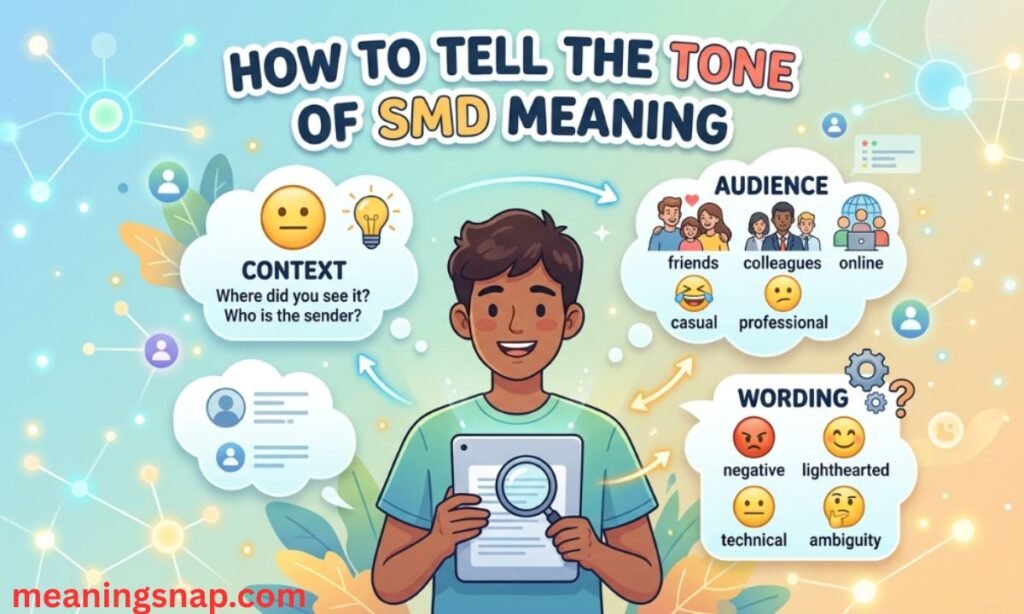
This is where most people get tripped up. The letters never change, but the meaning shifts hard depending on context. A text from your best friend hits different than the same three letters from someone you just met online.
Figuring out the SMD meaning in text almost always comes down to reading these small signals correctly. A few signals tend to give away the real intent behind the message. Caps lock usually signals anger. A follow-up laughing emoji usually signals a joke. Silence after the message, with no explanation, tends to mean the sender is genuinely upset.
Here’s a simple breakdown of how SMD tends to land depending on where it shows up:
| Example / Context | What It Means / How It Feels |
|---|---|
| Close friend after losing a game or bet | Playful, almost affectionate teasing |
| Stranger replying to a heated comment | Genuine hostility or frustration |
| Sibling or family group chat, casual tone | Lighthearted, inside-joke energy |
| Someone you’re arguing with online | Meant to end the conversation on a harsh note |
| Gaming chat after a rough loss | Competitive trash talk, rarely personal |
Notice how the relationship matters more than the words. The same acronym can be a compliment between friends and an insult from a stranger. That’s part of what makes texting slang so different from spoken language. Nobody hears tone of voice. Everyone reads intent into punctuation, timing, and history with the sender.
Timing matters too, and it’s easy to overlook. An SMD sent instantly, right after a joke, almost always reads as playful because the quick reply signals the sender is still in a lighthearted headspace. An SMD that shows up minutes or hours after an argument, with no other message around it, tends to land as genuine frustration. The gap gives it weight. Silence before or after the message often says more than the message itself.
Read Also: WYA Meaning in Text: What It Really Means and How to Reply (2026 Guide)
Other Meanings of SMD You Might See
Texting isn’t the only place SMD shows up, and it’s worth knowing the other versions so you don’t mix them up.
- Surface-Mounted Device: An electronics term for a component soldered directly onto a circuit board instead of using wire leads. It’s a standard part of how modern gadgets get built, and you’ll see the term used constantly in manufacturing specs and repair guides.
- Sega Mega Drive: The European and international name for the Sega Genesis console. Retro gaming collectors and forums use this term regularly, especially outside the United States, where the console never carried the Genesis name.
- Standardized Mean Difference: A statistics term used in research papers to compare results across studies that measured outcomes on different scales. You’ll mostly run into it in academic journals and meta-analyses.
- Sensory Modulation Disorder: A term used in occupational therapy and psychology to describe difficulty processing everyday sensory input, like sound, touch, or light. It shows up in clinical and educational settings, not casual conversation.
If you see SMD on a gaming forum or in a research paper, none of the texting meaning applies. Context always decides which SMD you’re looking at, and outside of texting and social media, the vulgar meaning almost never comes up. A parent researching sensory issues for their kid and a teenager texting a friend are reading the exact same three letters and getting two completely unrelated messages.
How to Respond If Someone Sends You SMD
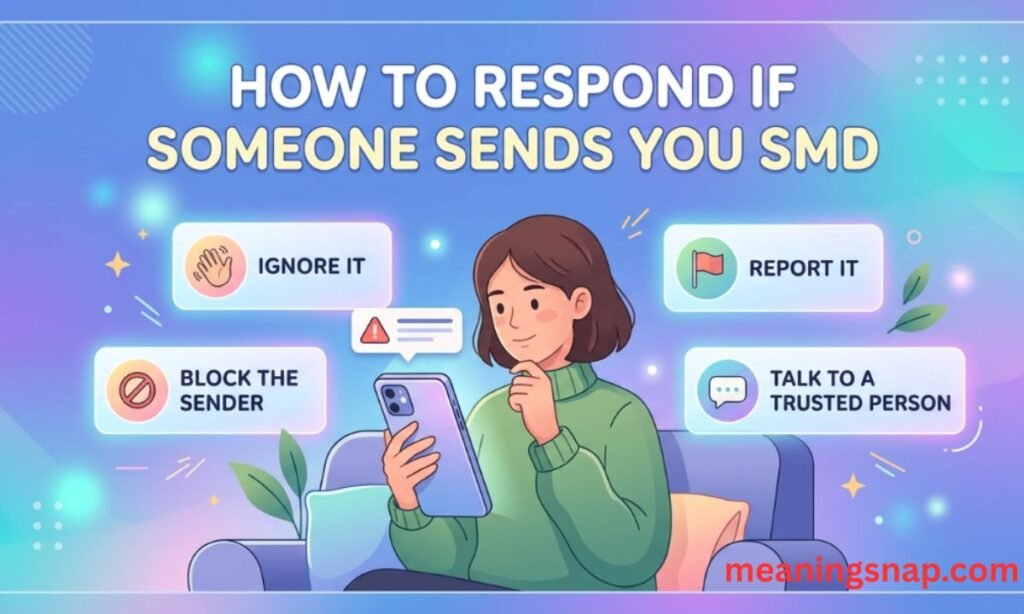
Getting an SMD text can throw you off if you’re not sure how serious it is. Once you understand the SMD meaning in text and the situation it showed up in, deciding how to respond gets a lot easier. The good news is there’s usually a pretty easy way to gauge the situation before you respond.
Common Mistake: A lot of people assume SMD always means someone is furious with them. In most casual friend groups, it’s closer to a verbal eye roll than an actual insult. Overreacting to a joking SMD can turn a lighthearted moment into an unnecessary fight.
Here’s how that plays out in real conversations:
Text Exchange 2 (Playful):
You: I told you not to bet against me Friend: smd, I’m still right about the other game You: 😂 fair enough
Text Exchange 3 (Genuinely upset):
You: sorry I can’t make it tonight, something came up Them: smd. you always do this You: hold on, let me explain what happened
Notice the difference. In the first exchange, SMD barely registers as an insult. It’s banter. In the second, the lack of emojis and the follow-up line signal real frustration, and responding with a joke would likely make things worse.
If you’re ever unsure which one you’re dealing with, the safest move is to ask directly. A simple “wait, are you serious right now” clears up more confusion than guessing ever will.
It also helps to think about your own history with the person before reacting. Someone you’ve known for years and joke around with constantly deserves the benefit of the doubt. Someone you barely know, or someone you’ve been arguing with for a while, likely doesn’t. Matching your response to the relationship, not just the message, keeps small misunderstandings from turning into bigger ones.
Read More: CFS Meaning: Text, Social Media & Chat Slang
SMD on Social Media vs. Texting
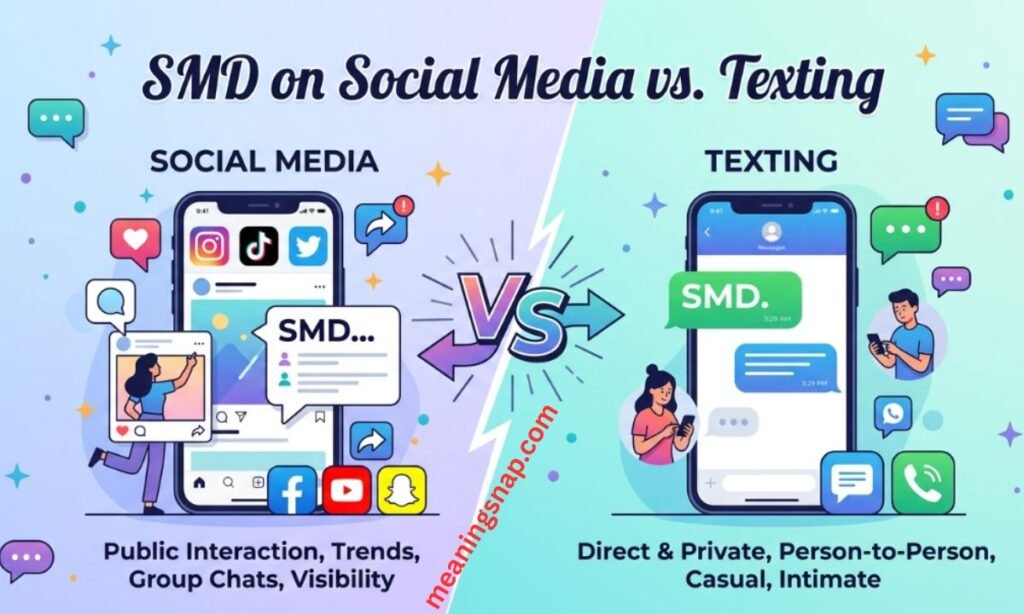
SMD shows up differently depending on the platform. In private texts and DMs, it’s usually tied to a specific relationship and a specific moment, which makes tone easier to read. In public comment sections, all of that context disappears.
On TikTok and Instagram, SMD tends to show up in comment threads, often aimed at creators, other commenters, or public figures. Without any relationship history to lean on, it almost always reads as hostile in these spaces. Someone commenting SMD under a stranger’s post is rarely being playful.
Group chats sit somewhere in the middle. The people involved usually know each other, but the audience is bigger than a one-on-one text, so there’s more room for the comment to land wrong or get taken out of context by someone who wasn’t part of the original joke.
Text Exchange 4 (Comment section style):
Commenter A: this take is completely wrong Commenter B: smd, nobody asked Commenter A: 💀 okay then
Even with an emoji softening it, comment section SMD tends to carry more edge than a text between friends. Younger users, especially teens and early twenty-somethings, are more likely to use it casually online, while older Millennials tend to reserve it for moments of actual frustration.
Snapchat sits closer to texting than to public comments, since most conversations there happen one-on-one or in small, established friend groups. That’s part of why SMD tends to feel more playful on Snapchat than it does under a public TikTok video, where the sender and receiver often have no relationship at all.
Is SMD Appropriate to Use?
Understanding the SMD meaning in text is only half the battle. Knowing when it’s okay to use matters just as much. Short answer: it depends entirely on who you’re talking to. SMD is not appropriate for work chats, family group threads with older relatives, professional emails, or conversations with people you don’t know well. The vulgar root of the phrase makes it a bad fit for anywhere professionalism matters.
Among close friends who already use this kind of language casually, it’s a normal part of the back-and-forth. The line usually comes down to whether both people already text this way with each other. If you’ve never used slang like this with someone before, sending SMD out of nowhere is a risky first move.
A few situations worth avoiding entirely:
- Messaging a coworker or manager, even in a joking tone
- Texting someone you’ve just started talking to
- Any family chat that includes parents, grandparents, or younger kids
- Public comments under a brand or business account
Text Exchange 5 (When it goes wrong):
New coworker: hey can you resend that file You: smd I already sent it twice New coworker: …I’ll just ask someone else
That exchange shows exactly why context and relationship history matter so much. What reads as a joke to a close friend can come across as genuinely rude to someone who doesn’t know you well yet.
A good rule of thumb: if you’d hesitate before saying the full phrase out loud in front of that person, don’t send the abbreviation either. The letters might feel like they soften the impact, but the meaning behind SMD in text doesn’t change just because it’s shorter to type.
Read Also: JFC Meaning in Text: What It Really Means & How to Use It
Slang Similar to SMD
SMD isn’t the only dismissive acronym floating around texts and comments. A few others carry similar energy, though each one lands a little differently.
STFU works as a blunter, less sexually charged way to tell someone to stop talking. IDC signals indifference rather than anger, more of a shrug than an insult. K, sent alone, often reads as passive aggressive rather than outright hostile. GTFO leans more toward disbelief or shock than genuine anger, depending on the context.
Knowing these related terms helps put the SMD meaning in text into perspective. It sits on the harsher end of dismissive slang, but it’s part of a much bigger family of shorthand people use to end conversations quickly.
Ranking these roughly by intensity, IDC and K tend to sit on the milder end, STFU and GTFO land somewhere in the middle, and SMD usually sits at the top of the scale because of the crude phrase it’s built on. Knowing where it falls on that scale makes it easier to judge how strong a reaction you’re dealing with.
FAQs
What does SMD mean in a text message?
SMD is a crude acronym people use to tell someone off, usually out of frustration or, among friends, as a joking insult. The exact tone depends on the relationship and context.
Is SMD always meant to be offensive?
No. Between close friends, it often works as playful teasing rather than a genuine insult. From strangers or in heated arguments, it usually is meant to offend.
What does SMD mean on TikTok or Instagram comments?
On public platforms, SMD usually carries more hostility since there’s no personal relationship softening the message. It’s commonly aimed at creators, other commenters, or public accounts.
What’s the difference between SMD in texting and SMD in electronics?
In texting, SMD is a vulgar dismissive phrase. In electronics, it stands for Surface-Mounted Device, a component soldered directly onto a circuit board. The two meanings share no connection beyond the letters.
How do I know if someone is joking when they send SMD?
Look at emojis, punctuation, and your history with that person. A laughing emoji or lighthearted follow-up usually signals a joke, while silence or caps lock tends to signal real frustration.
Final Thought
The SMD meaning in text comes down to two things: relationship and tone. The same three letters can be a joke between best friends or a genuine insult from a stranger, and reading the room matters more than knowing the definition. Bottom line, when in doubt, look at who sent it and how, before deciding how to react.

Alex Morgan is a writer focused on explaining slang, words, phrases, acronyms, and popular expressions in a simple and easy-to-understand way. Through clear explanations and helpful examples, Alex helps readers quickly understand what words and phrases mean and how they’re commonly used.