You’re scrolling through your phone at midnight, half asleep, when a text pops up from your crush: “wtms?” You stare at it. You reread it twice. You have zero idea what it means, and asking feels embarrassing, so you do what everyone does when a text stumps them. You open Google and type “WTMS meaning in text” faster than you’ve typed anything all week.
Here’s the thing: you’re not the only person stuck in that exact moment. This four-letter combo shows up in Snapchat replies, TikTok comments, and random group chats, and it somehow means two completely different things depending on who sent it. The WTMS meaning in text splits into two real definitions, and by the time you finish this guide, you’ll know exactly which one fits your situation, plus how to reply without sounding awkward or clueless.
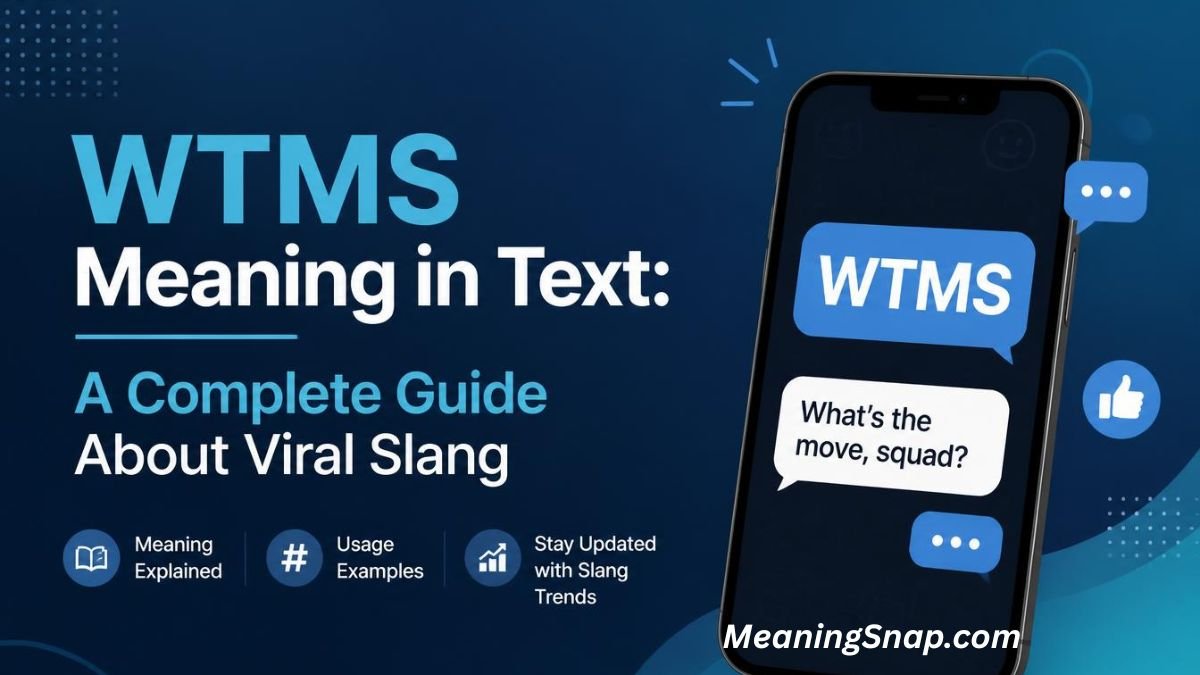
What Does WTMS Mean in Text? (The Quick Answer)
Let’s get straight to the point, because you didn’t come here for a slow reveal.
Quick Answer: WTMS stands for two different phrases, and which one fits depends on the context around it.
- Meaning #1: “What’s the Move, Sis?” – a casual way of asking about plans
- Meaning #2: “What That Mouth Do?” – a flirty, bold, suggestive line
Both are valid. Neither one is “the real one” while the other is fake. Language doesn’t work that way, especially internet slang, which shifts the moment it starts spreading across different friend groups and platforms. WTMS in texting picked up two separate meanings because two separate online communities started using the same four letters for two separate phrases, and both stuck.
The WTMS meaning in the text you’re dealing with comes down to three things: who sent it, what platform you’re on, and what the conversation looked like right before that text landed. A group chat asking “wtms tonight?” after someone mentions a party is almost always about plans. A DM sent right after you post a selfie, with no context and a smirking emoji attached, usually isn’t.
You might be wondering why one abbreviation gets to mean two things at once. Honestly, that’s just how Gen-Z slang works. Abbreviations get created independently in different corners of the internet, and sometimes they collide. WTMS happens to be one of the clearest examples of that collision, which is why this guide walks through both meanings in full instead of picking one and ignoring the other.
The Real Origin of WTMS: Where This Slang Term Came From
WTMS didn’t show up overnight, and its origin story branches in two directions, which lines up neatly with the two meanings floating around today.
The first branch comes from “sis,” a term of address rooted in African American Vernacular English (AAVE), a dialect that has shaped a huge chunk of modern internet slang and Gen-Z texting culture. In AAVE, “sis” doesn’t need to refer to an actual sister. It gets used the way “bro” gets used for a guy friend: a warm, casual way to address someone close to you. Pair that with “what’s the move,” a phrase people have used for decades to ask about plans, and you land on “what’s the move, sis,” shortened once texting culture demanded faster, shorter messages.
The second branch traces back to meme culture and short-video comment sections. “What that mouth do” started as a bold, joking line dropped under selfies and thirst-trap posts, the kind of comment built to get a reaction rather than a genuine answer. As Snapchat streak culture, TikTok comment threads, and Instagram DMs became the main stage for flirty online banter, that phrase got compressed into WTMS the same way “what’s the move” did.
Both phrases landed on the same four letters around the same general stretch of texting history, and neither online community knew the other was doing it. That’s the honest story behind the WTMS meaning in text mystery, and it holds up better than the vague, undocumented “early Black Twitter” explanation repeated across other slang sites without much backing.
Read Also: NTM Meaning: The Real Definition, Origins, Uses & Social Media Trends in 2026
Meaning #1: “What’s the Move, Sis?” Explained
When someone texts WTMS and means “What’s the Move, Sis,” they’re asking one simple question: what’s the plan? This version of WTMS meaning in text shows up constantly in friend group chats, especially on weekend nights when everyone’s trying to figure out where to go or what to do next.
Think of it this way: it works like the texting equivalent of poking your head into a room and asking, “so what’s happening?” There’s no pressure behind it and no hidden agenda. Someone just wants information so they can decide whether to show up.
This meaning tends to appear in a specific set of situations:
- Group chats planning a night out
- Friends checking in before a hangout
- Someone asking if plans changed last minute
- General “what’s everyone doing this weekend” energy
The tone stays light and friendly here. Nothing about it reads as suggestive, and most people who use WTMS this way have no clue the flirtier version even exists. If your friend group leans toward slang-heavy texting, WTMS almost always carries this meaning for them, no second definition involved.
One detail worth noting: dropping the word “sis” doesn’t change much. Plenty of people type “wtms” without meaning the literal “sis” anymore, the same way people say “lol” without laughing out loud. The abbreviation outgrew its spelled-out phrase, which happens to nearly every piece of viral slang eventually.
Meaning #2: “What That Mouth Do?” Explained
The second version of WTMS meaning in text takes a sharp turn. When someone sends WTMS to mean “What That Mouth Do,” they’re being flirty, bold, and a little chaotic on purpose. This is a suggestive phrase, no way around it, and it lands close to a spicier cousin of “wyd” or “you up?”
People send this version after a selfie gets posted, in the middle of playful back-and-forth with a crush, or as a joking comment under a thirst trap. It’s rarely meant to open a deep conversation. It’s built to tease, get a reaction, or push a flirty exchange forward.
Context becomes everything with this meaning. It shows up most often in:
- Comments under selfies or TikToks
- Late-night DMs with someone you’re already flirting with
- Playful banter between couples
- Meme pages joking around under someone’s post
I personally think this is the version that catches people off guard the most, because it looks identical to the innocent “what’s the move” version on the page. Four capital letters, no extra context, sent by someone whose intentions you might not know yet. That’s exactly why the next section matters more than anything else in this guide.
One more thing worth flagging: this meaning carries real weight depending on who sends it. From a partner or someone you’re already flirting with, it reads as playful. From someone you barely know, it can feel invasive fast, and that’s a boundary worth paying attention to.
How to Tell Which WTMS Meaning Someone Means
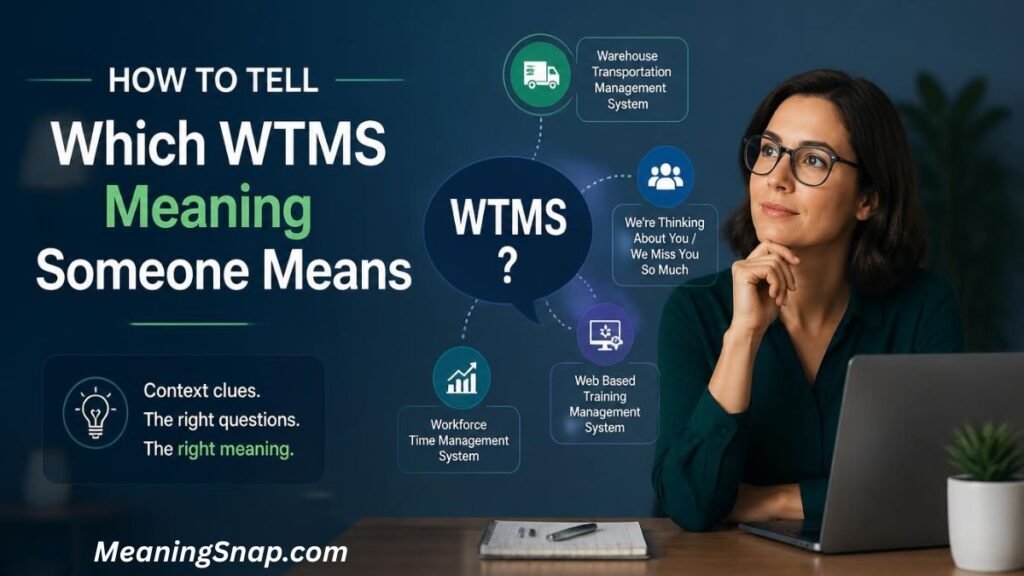
So how do you figure out which WTMS meaning in text applies to your situation? Bottom line: context clues do almost all the work, and once you know what to look for, it takes about two seconds to land on the right answer.
Start with the relationship. A close friend from your group chat almost always means plans. A crush, a dating app match, or someone already flirting with you tends to mean the suggestive version. Someone you barely know sending it out of nowhere leans flirty too, since planning texts usually arrive with extra context, like “wtms tonight?” rather than a bare “wtms” on its own.
Next, look at what came before it. If the last few messages covered a party, dinner, or hangout plans, WTMS is asking about the plan. If the last message was a selfie, a mirror pic, or flirty banter, the mouth version is almost certainly what’s happening.
Run through this short checklist whenever you’re unsure:
- Who sent it, and how well do you know them?
- What was the conversation about right before this text?
- Did they just see a photo or post from you?
- Is there an emoji attached, and what kind?
- Which app or platform is this on?
Emojis matter more than people realize. An 👀 or 😏 next to WTMS points toward flirty. A plain question mark or nothing at all usually points toward plans. Run a text through these five questions, and the confusing four letters stop being confusing at all.
Read Also: GPI Meaning in Text: Definition, Uses, and Examples Explained
WTMS on Snapchat, TikTok, Instagram, and Discord
Where you see WTMS changes what it likely means, which is why platform context deserves its own breakdown.
On Snapchat, WTMS shows up constantly during late-night streak conversations, and it leans flirty more often than not. Snapchat’s whole design revolves around quick photos and disappearing messages, which naturally pushes conversations toward a bolder tone once two people feel comfortable with each other.
TikTok comment sections tell a different story. WTMS dropped under a video, especially a selfie clip or lip-sync post, almost always means “What That Mouth Do.” It’s a joke comment built to get likes and reactions from other people scrolling past, not a real question expecting a real answer.
Instagram DMs sit somewhere in the middle. Close friends might use it to ask about plans, while someone sliding into your DMs right after a story post is far more likely to be using the flirty version.
Discord flips the pattern entirely. Gaming servers and group chats there use WTMS almost only to mean “what’s the move,” since the whole platform revolves around coordinating who’s playing what and when. Someone typing WTMS in a Discord server chat is checking if the group’s about to start a match, not flirting.
Group texts on iMessage or WhatsApp lean toward plans too, since group settings naturally push conversations toward logistics over suggestive banter. Matching the WTMS meaning in text to the right platform makes the guesswork disappear fast, especially once you pair it with the checklist from the last section.
Also Read: LMS Meaning: What Does LMS Mean in Text? Slang Meaning & Examples
Real Text Conversation Examples Using WTMS
Reading definitions only gets you so far, so here’s what the WTMS meaning in text looks like inside real conversations across a handful of different situations.
Example 1: Group Chat Planning
Jake: are we still doing something tonight
You: idk yet, wtms?
Jake: pizza place at 8, you in?
Example 2: Flirty Snapchat Exchange
Crush: just saw your snap 👀
Crush: wtms
You: lol why do you ask
Example 3: TikTok Comment Section
Random comment: bro posted one video, and the comments are already “wtms 💀”
Example 4: Discord Gaming Server
Teammate: ranked queue opens in 10
You: wtms, duo or squad tonight?
Example 5: Random DM (Boundary Moment)
Stranger: wtms
You: not looking for that kind of chat, but thanks
Example 6: Playful Couple Texting
Partner: home in 20 minutes
Partner: wtms when I get there 😏
You: come find out
Notice how the surrounding messages, not the four letters themselves, tell you which meaning is in play every time. Example 1 and Example 4 clearly ask about plans, while Example 2 and Example 6 lean flirty because of the emoji and timing. Example 5 shows exactly how to handle it when the flirty version shows up somewhere you didn’t invite it, which happens more than people expect once WTMS starts trending again.
WTMS vs WTM vs WYD vs HMU: What’s the Difference
WTMS isn’t the only slang abbreviation floating around that sounds a little like a secret code. Seeing the WTMS meaning in text next to its closest cousins makes the differences click faster, so here’s a side-by-side comparison to keep them straight.
| Abbreviation & Example | What It Means / How It Feels |
|---|---|
| WTMS – “wtms tonight?” | Asking about plans, or a flirty check-in, depending on context |
| WTM – “wtm this weekend” | “What’s the Move” without “sis,” almost always about plans |
| WYD – “wyd rn” | “What are you doing,” neutral by default but can lean flirty with the right emoji |
| HMU – “hmu later” | “Hit me up,” a low-pressure invitation to reconnect |
WTM sits closest to WTMS in spelling, and people mix them up all the time, but WTM rarely carries a suggestive meaning on its own. WYD covers similar ground to both versions of WTMS, minus the extra letter, which is why tone and emojis matter so much when you’re reading any of these texting abbreviations. HMU stands apart from the rest since it’s less of a question and more of an open invitation, useful whether you’re planning a hangout or trying to keep a flirty conversation going without pushing too hard.
Common Misspellings and Text Variations of WTMS
Typing fast on a phone screen creates typos, and WTMS collects its fair share of them. Knowing the common variations helps you recognize the slang even when it shows up slightly mangled by autocorrect or a fast thumb.
Some of the most common variations include:
- Wtms or wtms (lowercase doesn’t change the meaning at all)
- WTM (missing the final letter, often meant the same way)
- WTMD or WTNS (typo swaps from hitting a neighboring key)
- WTSM (letters flipped by accident)
Capitalization plays no role in how WTMS reads. Texting culture treats lowercase as the default, and using all capital letters usually signals emphasis or excitement rather than a different meaning. So “WTMS” and “wtms” mean exactly the same thing, and neither version reads as more formal or more serious than the other.
Autocorrect causes most of the confusion here, since phones don’t recognize WTMS as a real word and sometimes try to “fix” it into something else entirely. None of these typos change the WTMS meaning in text, they just make it slightly harder to spot at first glance. When in doubt, the context clues from earlier in this guide still apply regardless of how the letters got scrambled.
When to Use WTMS (and When Not To)
Knowing what WTMS means matters less than knowing when it’s appropriate to send. Timing and audience make or break how this slang lands.
WTMS works well in these situations:
- Group chats with friends who already use similar slang
- Flirty conversations with someone who’s shown interest back
- Comment sections where playful, joking energy is the norm
- Casual planning texts among people who text this way often
WTMS doesn’t work nearly as well here:
- With someone you just met or barely know
- In family group chats, for obvious reasons
- During a serious or emotional conversation
- With coworkers, classmates, or anyone in a formal setting
Think of it this way: WTMS carries a casual, sometimes suggestive tone baked into it, so sending it into the wrong setting creates confusion at best and discomfort at worst. Matching the WTMS meaning in text to the right audience keeps things from getting awkward. The safest rule of thumb is matching the energy of the conversation already happening. If things are light and joking, WTMS usually fits. If the conversation carries any weight to it, save the slang for another time.
How to Reply to WTMS
Getting a WTMS text puts the ball in your court. How you reply depends on which WTMS meaning in text landed in your messages.
If it’s about plans, keep it simple and direct:
- “Heading to Jake’s around 8, pull up”
- “Nothing set yet, you got ideas?”
- “Might just stay in tonight honestly”
If it’s the flirty version and you’re into it, a playful reply keeps the energy going:
- “You tell me 😏”
- “Come find out”
- “Why, you thinking about it?”
If it’s flirty and you’d rather laugh it off, a funny reply works just as well:
- “Idk man, ask it yourself”
- “Chill, FBI”
- “It talks sometimes, that’s about it”
If the message crosses a line or comes from someone you don’t want that energy from, a direct, calm reply shuts it down without drama:
- “Not my thing, but thanks”
- “I’m not comfortable with that”
- Simply not responding at all
There’s no wrong way to handle a text that makes you uncomfortable. You don’t owe anyone a flirty response just because they sent one, and a short, clear boundary always beats an awkward, forced reply.
Read Also: WYF Meaning in Text: What It Really Means (You’ll Be Surprised)
Is WTMS Okay to Use at Work or School?
Short answer: no. WTMS belongs entirely to personal texting and casual online spaces, and it has no place in professional communication or classroom settings.
Sending WTMS to a coworker, even a genuinely funny one, risks a misunderstanding that’s hard to walk back once it lands wrong. Workplace communication runs on clarity, and a suggestive or ambiguous abbreviation works against that every time, regardless of how well you think you know the person on the receiving end. The same goes for teachers, professors, or school group projects. What reads as harmless slang between friends can come across as inappropriate or unprofessional the moment it lands somewhere it doesn’t belong.
Even the friendliest version of the WTMS meaning in text has no place in a professional setting. Most workplaces and classrooms expect complete sentences over texting shortcuts, even for the innocent “plans” meaning. Plenty of Gen-Z workers have learned this lesson the hard way, sending casual texting habits into a formal Slack channel or work group chat without thinking twice. It only takes one confused manager or one awkward reply from HR to remember that texting slang and office communication live in two completely different worlds.
WTMS in US vs UK Texting Culture
WTMS started in American texting culture, and it still shows up far more often in the US than anywhere else, but UK slang has been picking it up too, especially among younger users who follow the same TikTok trends and Snapchat habits as their American counterparts.
In the US, both meanings circulate widely, and the flirty version tends to dominate on TikTok and Snapchat specifically because those platforms skew younger and lean into bold, joking humor. American teens and young adults also mix WTMS with other AAVE-rooted slang more freely, since AAVE has shaped a huge share of mainstream US internet culture for years now.
UK texting culture tends to favor the “what’s the move” meaning slightly more than the flirty one, at least for now. British slang already has its own set of flirty abbreviations and phrases, so WTMS often gets absorbed into UK texting as a planning term first, with the suggestive meaning trailing behind as American internet trends continue crossing over through TikTok and Instagram.
Either way, younger users on both sides of the Atlantic run into the same WTMS meaning in text confusion this guide addresses: one abbreviation, two meanings, and a good bit of context needed to sort out which one applies. Slang travels fast online these days, and WTMS is a solid example of how quickly a single term can cross borders and pick up new variations along the way.
FAQs About WTMS
What does WTMS mean in text?
WTMS usually means either “What’s the Move, Sis?” or “What That Mouth Do?” The right meaning depends on who sent it, the platform, and the conversation happening around it.
Is WTMS always flirty?
No. WTMS only turns flirty when the context points that way, like a comment under a selfie or a late-night DM. In group chats about plans, it’s completely casual.
Is WTMS the same as WTM?
They’re close cousins, but WTM almost always means “What’s the Move” without any suggestive undertone, while WTMS can carry either meaning depending on the situation.
Who uses WTMS the most?
Gen-Z and younger millennials use WTMS most often, especially on Snapchat, TikTok, and Instagram, though it shows up in gaming chats and group texts too.
How do I know if WTMS is meant seriously or as a joke?
Look at what happened right before the text landed. A planning conversation points toward a real question, while a selfie or flirty exchange points toward a joking, suggestive tone.
Bottom Line on WTMS Meaning in Text
WTMS isn’t as confusing as it looks once you know both sides of the story. The WTMS meaning in text you’re dealing with almost always comes down to who sent it, what platform carried it, and what the conversation looked like right before those four letters showed up. Sometimes it’s a friend asking about tonight’s plans. Sometimes it’s a flirty line dropped under a selfie. Neither version is wrong, and now you’ve got a real way to tell them apart instead of guessing.
Next time WTMS lands in your messages, run it through the checklist from this guide instead of panicking or googling it at midnight again. Check the sender, check the platform, check the message right before it, and you’ll land on the right meaning almost every time. Slang like this moves fast, but now you’re not behind on it anymore.

Alex Morgan is a writer focused on explaining slang, words, phrases, acronyms, and popular expressions in a simple and easy-to-understand way. Through clear explanations and helpful examples, Alex helps readers quickly understand what words and phrases mean and how they’re commonly used.