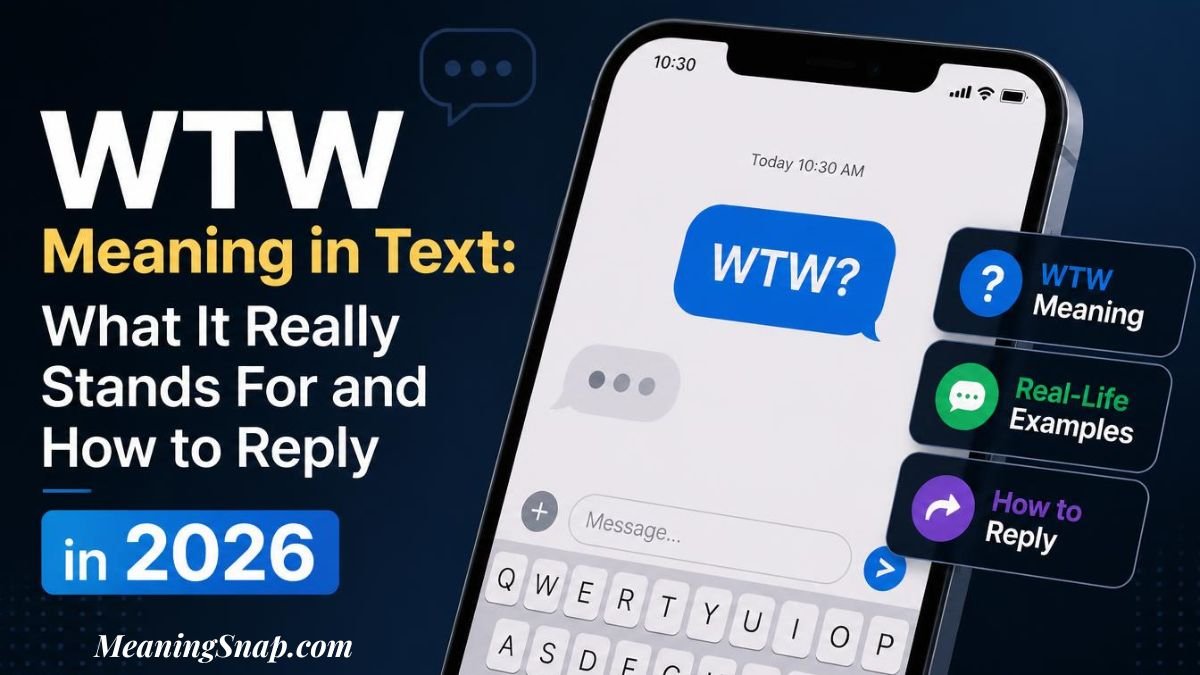
You’re scrolling through your phone at 11 p.m. on a Friday when a text pops up from your crush: “wtw 👀”. No punctuation, no context, just three letters staring back at you, and you have no idea what the WTW meaning behind it actually is. Are they bored? Trying to make plans? Testing the waters? If you’ve frozen over a text like that, you’re in good company. WTW is one of those texting slang terms that looks harmless but somehow still manages to stall a conversation for a full five minutes while you figure out how to respond.
This guide breaks down what WTW actually stands for, where it came from, how it shows up across Snapchat, TikTok, Instagram, Wizz, and dating apps, exactly how to reply, and even the handful of totally unrelated things WTW can mean outside of texting.
Quick Answer
WTW usually stands for “What’s the Word,” a casual way of asking what’s going on or what someone’s up to. It can also mean “What’s the Wave,” especially when someone’s fishing for weekend plans. It has a few other meanings too, and we’ll cover those further down.
What Does WTW Actually Stand For?
The most common WTW meaning in text is “What’s the Word.” It works the same way as asking “what’s up” or “what’s new,” a low-effort opener that doesn’t demand much from the person receiving it. Someone sends “wtw” and they’re really just asking for an update: what you’re doing, what’s happening later, or whether anything interesting is going on.
The second major meaning is “What’s the Wave.” This version leans a little more toward plans and events. If a friend texts “wtw tonight?” they’re usually asking what the group is doing, not just checking in on your day. Both versions of the WTW abbreviation get used interchangeably, and honestly, most people who send it aren’t thinking about which specific phrase it stands for. It’s become its own thing, a short, universally understood way of asking “what’s going on with you.”
There’s a subtler pattern worth knowing. “What’s the word” tends to show up in one-on-one texts and feels more personal. “What’s the wave” shows up more in group chats and captions, tied to plans or events rather than a single person’s day. Neither is wrong, and the context around the message usually makes the intended meaning obvious within a sentence or two.
Read Also: O7 Meaning in Text: The Tiny Salute That Says More Than Words in 2026
Where WTW Actually Came From
The WTW abbreviation didn’t start on a phone screen. “What’s the word?” has been used as a spoken greeting for decades, especially within African American Vernacular English, long before texting slang turned it into three letters. It functioned the same way it does now: a casual way to ask for news, an update, or just to open a conversation without sounding formal.
As texting became the default way people talk, phrases that were already short got shortened even further. “What’s the word” became WTW for the same reason “laughing out loud” became LOL, because typing full sentences on a flip phone or an early smartphone keyboard was slow, and character limits on early SMS plans rewarded brevity. By the time group texts and Snapchat took over, WTW had already settled into everyday use among teenagers and young adults.
From there, it crossed over the way a lot of street slang does, spreading from close-knit communities into mainstream online slang used across the internet. You won’t find WTW listed in something like the Online Etymology Dictionary, since it’s still considered internet slang rather than standard English, but its lineage is well documented enough. It’s now recognized across most English-speaking countries, though it’s more deeply rooted in US slang than anywhere else. UK slang and Australian slang circles use it too, just with slightly less cultural weight behind the phrase itself.
WTW Meaning on Snapchat and in Group Chats
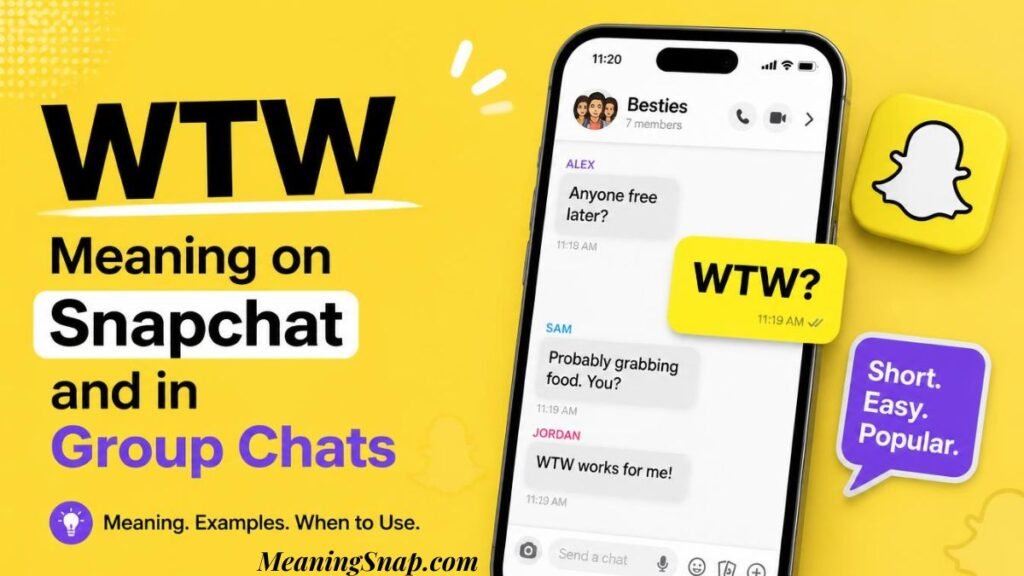
On Snapchat, WTW is about as low-stakes as texting slang gets. Snaps already disappear, so a quick “wtw” between friends fits the platform’s built-in casualness, nobody’s rereading it later or overanalyzing the wording. It’s most often used as a one-on-one check-in, less about plans and more about seeing what someone’s up to right now.
Group chats are where the “what’s the wave” version of WTW earns its keep. Someone drops “wtw this weekend” and the thread turns into a planning session within minutes, restaurant suggestions, who’s driving, whether Saturday or Sunday works better. It’s less of a question and more of a starting gun for the group to sort out plans together.
Read More: IG Meaning in Text: What It Really Means and How to Reply
WTW Meaning on TikTok
WTW shows up on TikTok more in captions and comments than in direct messages. Someone posting a get-ready-with-me video might caption it “wtw tonight 👀” to tease that they’re headed out somewhere without spelling out the details. It works as a hook, giving followers just enough to be curious.
In the comments section, WTW usually reads as a genuine question aimed at the creator. If someone posts a photo from a cool location or event, a comment reading “wtw??” is asking where it is or how to get in on it. It’s an easy way to ask for details without writing out a full sentence, and creators often answer with a quick reply or a follow-up video.
The tone on TikTok leans slightly more public and performative than a private Snapchat or DM. People aren’t just asking a friend what’s up, they’re often signaling to a wider audience that something’s happening worth paying attention to.
WTW Meaning on Instagram
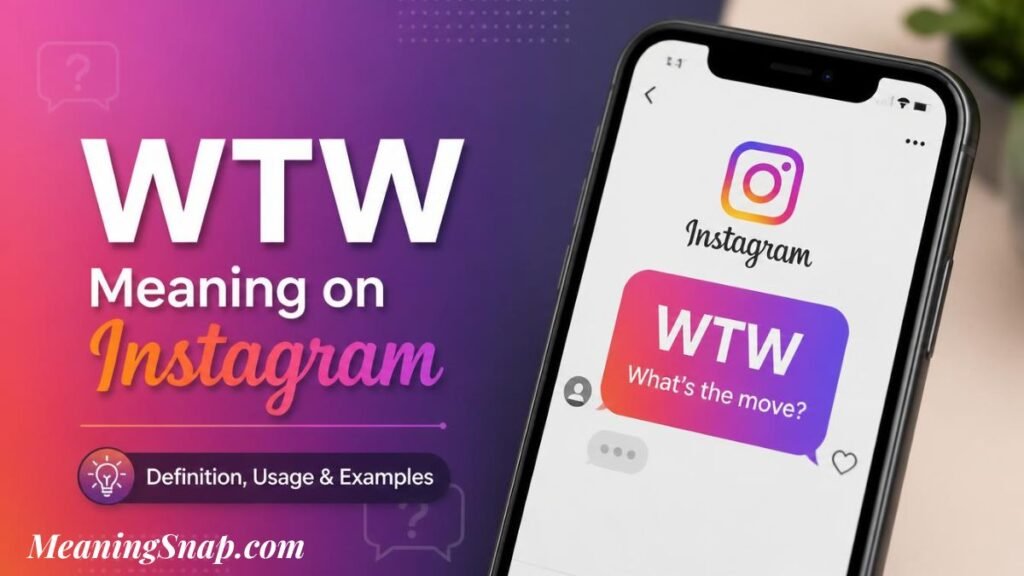
Instagram is where WTW works hardest as a DM opener. Replying to someone’s Story with “wtw” is one of the most common ways people slide into a conversation without it feeling forced, it references what they just watched and hands the other person an easy way to respond.
It shows up in regular DMs too, usually from someone who hasn’t talked to you in a while and wants a low-pressure way back in. “Hey, wtw with you lately?” reads as friendly and unbothered rather than needy, which is exactly the point.
Comments work a little differently. If a friend posts something new, a plain “wtw?” comment is almost always asking for context, what’s the news, what happened, what’s the story behind the post. It’s Instagram’s version of raising a hand for more information without derailing the post itself.
Read More: FWM Meaning in Text (2026): What It Really Means, Examples, Slang & Full Guide
What Does WTW Mean on Wizz?
Wizz is an app built for meeting new people rather than keeping up with friends you already have, and WTW fits right into that setup. Since everyone on Wizz is a stranger at first, “wtw” works as an easy, no-pressure opener, it doesn’t demand a real conversation, but it leaves the door open for one.
Sending “wtw” to someone new on Wizz is less about asking a specific question and more about testing the waters. It signals interest without requiring much effort from either side, which matters on an app where most conversations start cold. The meaning doesn’t change from how it works everywhere else, “what’s the word” or “what’s the wave”, but talking to a stranger gives it a slightly different job to do: breaking the ice instead of continuing an existing one.
WTW in Dating Apps and DMs: What It Really Signals
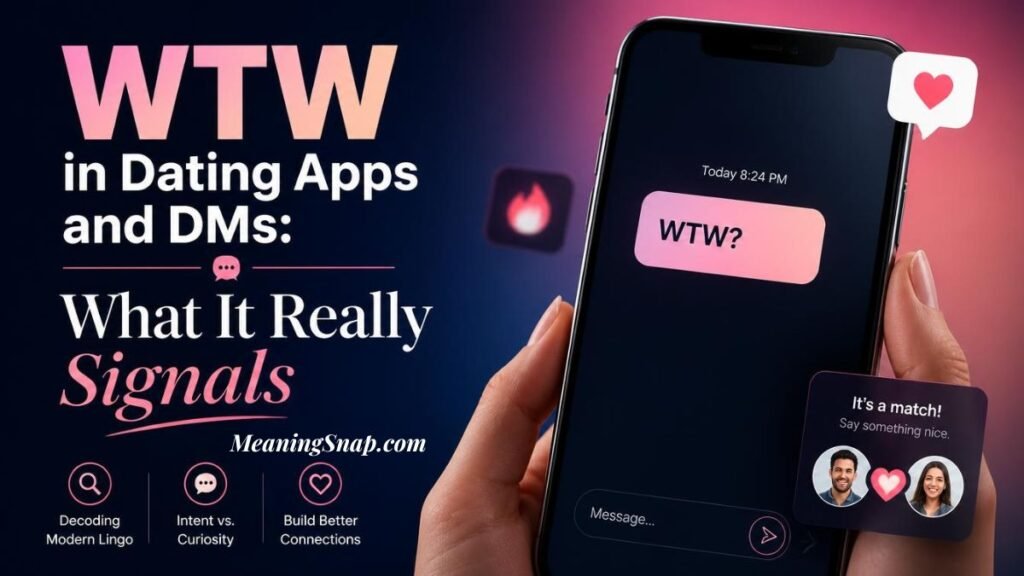
Dating apps changed the way a lot of casual slang gets used, and WTW is no exception. On Tinder, Bumble, or Hinge, WTW rarely means someone’s asking a literal question about your evening. It’s more of a temperature check, a way to see if there’s mutual interest without committing to anything more direct.
Timing matters here more than almost anywhere else. A “wtw” sent at 2 p.m. on a Tuesday probably means someone’s bored and curious. The same message at 11 p.m. on a Friday or Saturday carries a different weight entirely, closer to “are you free, and do you want to see me.” This is especially true once a conversation has moved past the first date texting stage and into more familiar territory.
It’s not automatically flirty, though. Context and the existing relationship still decide the tone. A friend from your group chat sending “wtw” means something completely different from a match on Hinge sending the exact same three letters. The words never change, but the intent behind them almost always does.
Also Read: JP Meaning in Text: What It Means in Chat, Social Media, and Online Slang
Does WTW Mean Something Different From a Girl or a Guy?
The letters don’t change based on who’s sending them. WTW means the same thing whether a girl or a guy is the one typing it, “what’s the word” or “what’s the wave,” nothing shifts about the actual definition. What people are really asking when they search for a difference is usually about tone and intent, not vocabulary.
In practice, the read on a “wtw” text often comes down to the relationship, not gender. A guy sending “wtw” to a friend group chat means the exact same thing as a girl sending it in that same group chat, what’s going on, is there a plan. The moment it shifts is when it’s one-on-one with a crush or a match, and even then it’s the context and timing doing the work, not the gender of the sender.
If there’s a real pattern worth noting, it’s this: WTW sent late at night or paired with an emoji like 👀 tends to read as more interested, regardless of who sent it. A flat, no-emoji “wtw” during the day almost always just means someone’s bored and killing time. The letters stay neutral. The person behind them decides the vibe.
WTW in Real Conversations
Reading about a slang term only gets you so far. Seeing it in context makes the tone click a lot faster, so here’s a mix of how WTW shows up across different relationships and moods.
Casual, low-key check-in between friends
Jordan: wtw tonight? Alex: probably just ordering food and watching something, wby?
Late-night, flirty energy with a crush
Sam: wtw 👀 Casey: just thinking about tacos honestly, wbu?
Group chat making weekend plans
Group chat: wtw this weekend?? Maya: there’s a thing downtown Saturday Priya: yesss let’s actually go this time
Dry, sarcastic response to a boring day
Devon: wtw Riley: nothing. staring at my ceiling. living my best life.
Soft opener after watching someone’s Instagram Story
Taylor: saw your story from the hike, wtw today?
Surprised reaction, using the “what the what” version
Person A: he quit his job to become a full-time beekeeper Person B: wtw?? since when??
Notice how the same three letters carry completely different energy depending on who’s texting and what just happened before it. That’s the entire trick to understanding WTW, the word never changes, but the vibe always does.
How to Reply to WTW Without Overthinking It
The easiest way to reply to WTW is to match the energy it was sent with. If someone’s being low-effort, a low-effort reply back is completely fine, “not much, you?” does the job. If they seem like they’re fishing for plans, that’s your cue to actually offer something specific rather than leaving it vague.
A few reliable approaches depending on who’s texting:
- From a friend: Answer honestly and toss the question back. “Just chilling, wtw with you?” keeps it moving without overthinking a reply to slang that was never that deep to begin with.
- From a crush or a match: A little specificity signals interest without saying too much. “Thinking about grabbing food later, you around?” leaves the door open.
- From a group chat: Suggest something concrete if you have an idea, or just agree with whatever’s already been floated. Group chats move fast, and a quick “I’m down” often works better than a long response.
- When it’s the “what the what” reaction version: There’s no real reply needed beyond matching the surprise, “I know, right?” covers it.
There’s no polite response formula to memorize here. WTW is casual by design, so a stiff or overly formal reply tends to feel more out of place than a short, honest one.
Other Things WTW Can Mean
Outside of “what’s the word” and “what’s the wave,” a handful of other meanings show up depending on the situation. None of these are common in everyday texting, but they’re real enough to cause confusion if you don’t know them.
- What to Watch: Used in streaming or entertainment contexts, usually asking for a recommendation. “WTW on Netflix tonight?”
- Worth the Wait: Applied to something that took time but delivered, a delayed movie, album, or delivery. “That sequel was honestly WTW.”
- Walk the Walk: A motivational phrase about backing up talk with action, unrelated to the texting slang entirely.
- Welcome to Work: Used somewhat ironically among coworkers, usually after something goes wrong on a Monday morning.
- What the What: A cleaner, softer alternative to expressing shock, similar to how it appeared in the reaction example above.
- Walk Through Walls: In a small number of gaming communities, WTW is generally understood as shorthand for this specific cheat or ability, though it’s a niche usage compared to the texting meaning.
Read Also: FYI Meaning in Text: What Does FYI Mean and How to Use It?
What Does Urban Dictionary Say WTW Means?
Urban Dictionary is crowd-sourced, so it carries more than one entry for WTW rather than a single clean definition. The most upvoted entry lines up with everything covered here: a casual way of asking what’s going on or what everyone’s doing. It’s the version that matches how WTW actually gets used across texting and social media.
A second, less common entry defines WTW as short for “what to wear,” usually posted by someone asking friends for outfit advice before an event. It’s a real definition, just a far less frequent one than the “what’s the word” meaning. If you come across WTW used this way, it’s almost always obvious from context, someone posting a photo of two outfits and asking which one to pick.
WTW Meaning as a Company: Willis Towers Watson
Outside of texting entirely, WTW has a completely unrelated meaning in the business world. It’s the NASDAQ ticker symbol for Willis Towers Watson, a global insurance, broking, and advisory firm headquartered in London. The company provides risk management, employee benefits consulting, and insurance brokerage services to businesses worldwide, nothing to do with slang or casual texting.
Anyone searching “WTW meaning company” is almost certainly looking for this Willis Towers Watson connection rather than the texting abbreviation. If you’re seeing WTW mentioned in a financial news article, an earnings report, or alongside a stock price, that’s the meaning in play. Outside of finance and insurance circles, the far more common use of WTW online is still the casual “what’s the word” version covered throughout this guide.
What Does WTW Mean in Medical Contexts?
In medicine, specifically ophthalmology, WTW stands for “white-to-white,” a measurement of the horizontal distance across the visible part of the eye, from one white edge of the cornea to the other. Eye doctors use this number when planning cataract surgery, fitting contact lenses, or sizing an intraocular lens, since getting that measurement right matters for how well the procedure goes.
This meaning has nothing to do with the texting slang. If you’ve landed on this section after searching “wtw meaning medical,” you were probably reading a clinical note, an eye exam summary, or a research paper rather than a text message. The two uses of WTW, the casual slang and the ophthalmology measurement, exist in completely separate worlds and just happen to share the same three letters.
WTW vs. WYD vs. SUP vs. HMU
WTW gets lumped in with a handful of other texting openers that all sound similar but carry slightly different intent. Here’s how they actually compare side by side.
| Term | Stands For | Vibe | Example |
|---|---|---|---|
| WTW | What’s the Word / What’s the Wave | Curious, checking in, open-ended | “wtw tonight?” |
| WYD | What (are) You Doing | Direct, asking about the current moment | “wyd rn” |
| SUP | What’s Up | Quick, minimal-effort greeting | “sup” |
| HMU | Hit Me Up | Inviting a response or future plans | “hmu if you’re free later” |
WYD tends to be the most direct of the group, asking specifically what someone is doing right now rather than what’s going on in general. WUD is essentially the same question typed a little differently, just another shorthand for “what you doing.” SUP is closer to a greeting than a real question. HMU skips the question entirely and just leaves the door open for someone to reach out later. WTW sits in the middle, casual enough to send without thinking, but open-ended enough to lead into actual plans if the other person picks it up.
Mistakes People Make With WTW
The most common mix-up is confusing WTW with WTF. They look similar at a glance, especially typed quickly, but WTW carries none of the frustration or shock that WTF does. Sending one instead of the other, especially by autocorrect, can send a completely wrong signal.
Ignoring context is another easy mistake. A “wtw” sent mid-afternoon on a random Tuesday is rarely a big deal, but treating every WTW text the same way regardless of timing, platform, or who sent it means missing the actual intent behind it. The words don’t change, but the situation around them almost always tells you more than the letters do.
Using WTW somewhere too formal is the last one worth flagging, more on exactly where that line sits below.
Read Also: FW Meaning in Text: What Does “FW” Mean in Chats, Social Media, and Online?
Is WTW OK to Use at Work?
Short answer: keep it out of formal channels. WTW works fine in a casual Slack message to a coworker you’re friendly with, something like “wtw for lunch?” between two people who already text that way. It doesn’t work in an email to your boss, a client-facing message, or anything that might get forwarded or read by someone who doesn’t know the slang.
The risk isn’t really about looking unprofessional in a serious way, WTW isn’t rude or inappropriate. It’s more that it reads as too casual for the context, and confusing to anyone who isn’t already familiar with texting slang. If you’re not sure whether a workplace conversation is casual enough for it, default to plain language, “what’s the plan” or “checking in” gets the same point across without the guesswork.
Frequently Asked Questions
Is WTW offensive or does it have a hidden meaning?
No. WTW doesn’t carry an offensive or hidden meaning. It’s one of the more harmless pieces of internet slang out there, just a casual way to ask what’s going on.
What does WTW mean on Snapchat and TikTok specifically?
The WTW meaning in text doesn’t really shift between platforms, but the delivery does. On Snapchat it’s usually a quick check-in between friends, while on TikTok it shows up more in captions or comments hinting at plans.
What’s the difference between WTW and WYD?
WTW leans toward “what’s going on” or “what’s the plan,” while WYD is more direct, asking specifically what someone’s doing in that exact moment. They overlap constantly, but WYD expects a more immediate answer.
Does WTW mean something flirty when a crush sends it?
It can. The WTW meaning itself doesn’t change, but late at night or in a one-on-one conversation, it often works as a soft way of checking whether you’re interested in hanging out.
Can I use WTW in a work email or professional message?
It’s best to avoid it. WTW reads as too casual for a boss, client, or coworker in most professional settings, plain language works better there.
Is WTW used the same way in the US, UK, and Australia?
Mostly, yes. WTW is more deeply rooted in US slang because of its origins, but it’s spread widely enough to be understood across the UK, Australia, and most other English-speaking countries.
What does “wtw tn” mean in text?
“Tn” is shorthand for “tonight,” so “wtw tn” just means “what’s the word tonight” or “what’s the wave tonight”, someone asking specifically about plans for later today rather than in general.
Final Thought
So the next time “wtw” lands in your messages at 11 p.m. on a Friday, you’ll know exactly what’s going on. It’s rarely as complicated as it feels in the moment, just three letters asking what’s up, what’s the plan, or whether you’re around. Read the timing, match the energy, and you’ll never freeze over a text like that again.

Alex Morgan is a writer focused on explaining slang, words, phrases, acronyms, and popular expressions in a simple and easy-to-understand way. Through clear explanations and helpful examples, Alex helps readers quickly understand what words and phrases mean and how they’re commonly used.